
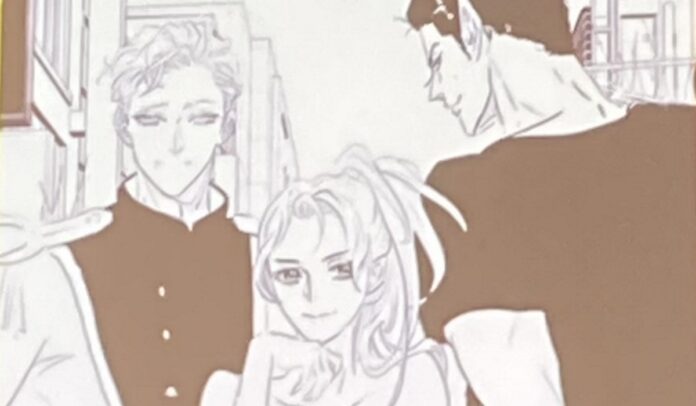
One reason why I love going to see artists at Otakon is seeing them frankly discuss their creative process. This year was no different, with professional comics artist Moon Taeyeon giving her audience a crash course in how to create webtoons. Moon began drawing in elementary school and put in long hours until she won a contest at Naver. Now she’s a seasoned webtoon artist and adjunct professor who teaches 200 students a year how to create comics.
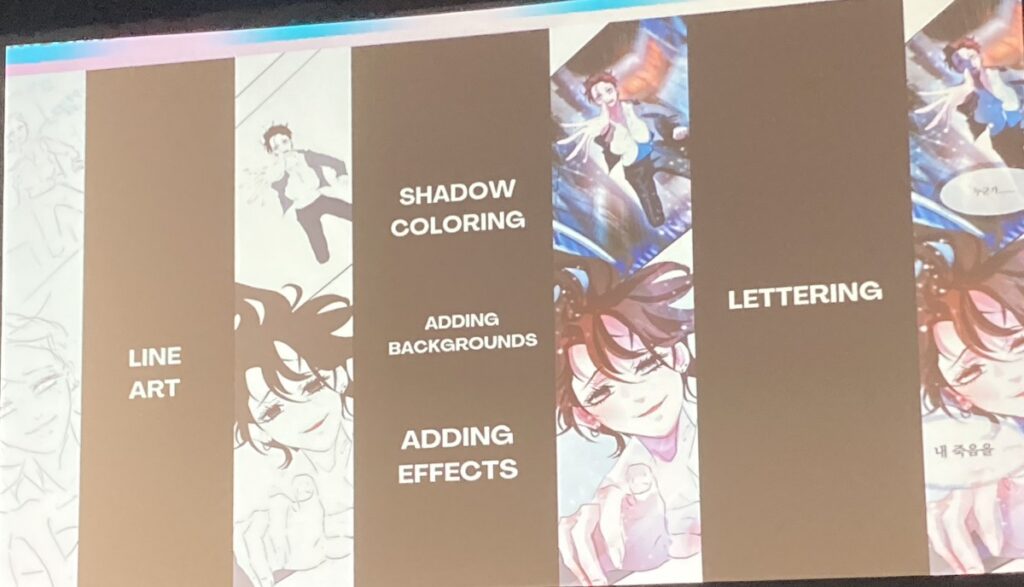
In her presentation, Moon stressed that webtoons are not just about the drawings. As she said, “there are countless layers you must complete.” Dialogue helps create a skeleton for the comic. Backgrounds are created via the program SKETCHUP, and must be adjusted in terms of transparency so that they harmonize with character designs. (They can also be bought from other artists that specialize in backgrounds only.) Organizing layers in Clip Studio Paint ensures an efficient workflow.
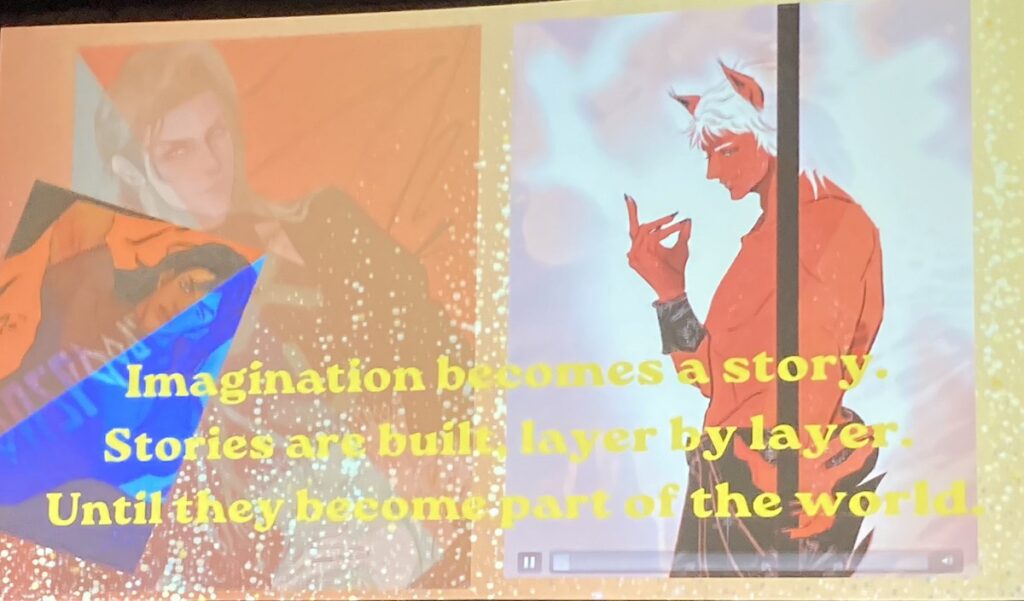
Moon is unsentimental about the difficulties of webtoon production. As she said, there are times at work where she can’t go to the bathroom for eight hours straight. She copes with the pressure by “eating, sleeping, and watching movies,” as well as “stealing energy from [her] students” as an adjunct professor. In other ways, though, she’s a romantic at heart. When she spoke about her two year research trip to develop backgrounds for one of her comics, she said that “I still remember the air, and the feelings of excitement from that time.”
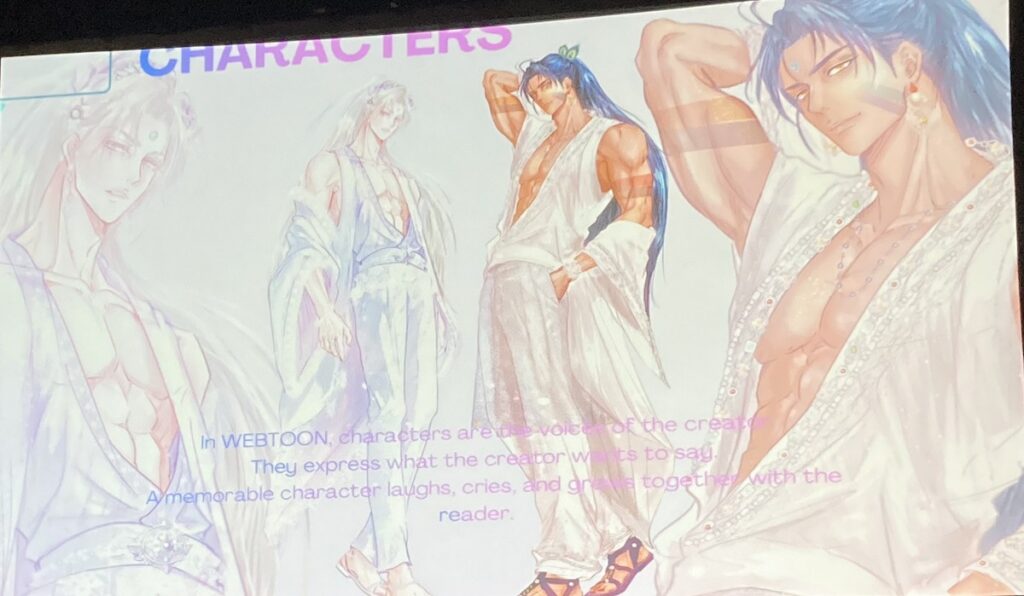
Characters are at the heart of Moon’s creative process. “My imagination began with a small character I made in elementary school,” she said. “As I grew older, the characters grew with me…a good character laughs, cries and grows with the reader.” Balancing their designs, from their clothing (inspired by college fashion design classes) to the color of their hair, with the overall work is crucial. Drawings that are too complex, or break too much from genre expectations, might not be right for a series even if they function as independent illustrations.
After attending her panel, KComicsBeat had the chance to speak with Moon Taeyeon about her process. What we learned was that Moon doesn’t just draw characters. The characters that she draws represent her.
This interview has been edited for clarity and content.
A role model for my whole life
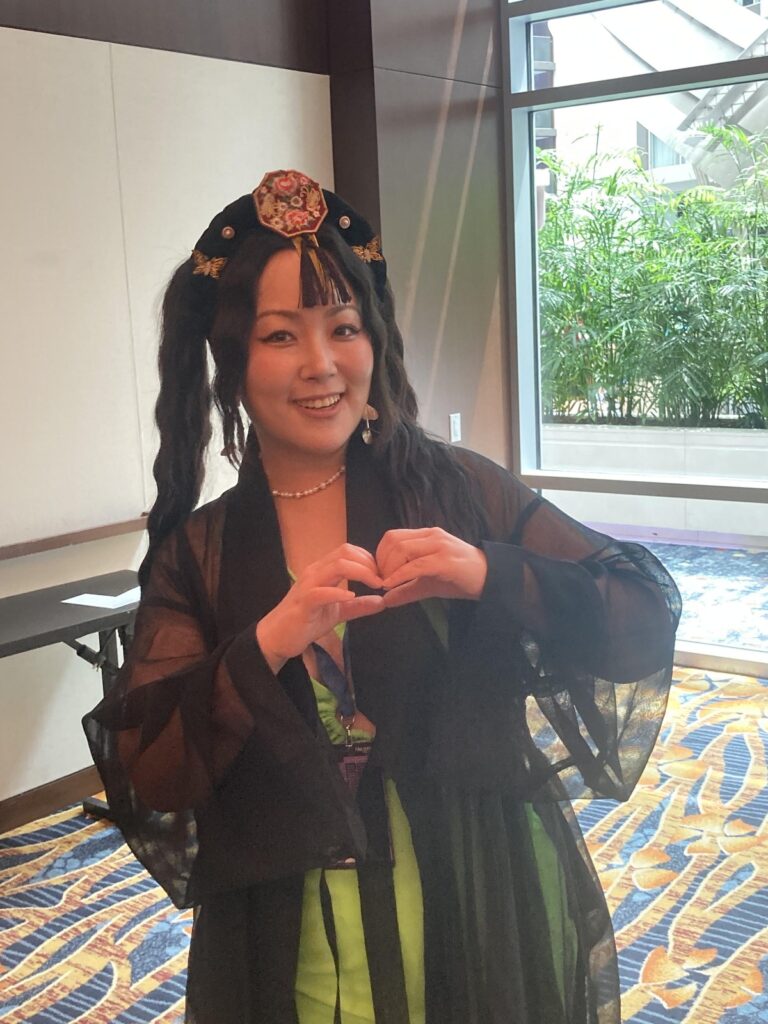
Adam Wescott: When did you first discover manhwa?
Moon Taeyeon: I discovered it through manhwa movies on television. I also read classic stories like Aesop’s Fables and Huckleberry Finn, which were also considered manhwa.
Wescott: Was there one you remember loving from that time?
Moon: Among manhwa books, there’s one from the 1990s called Audition. The author is Chon Kyeyoung. I don’t just “like” this manhwa, it’s a role model for my whole life. [Chon later created the 2014 webtoon hit Love Alarm, which was adapted into a live-action Netflix series in 2019.]
Wescott: In your panel, you said that you started drawing in elementary school. Could you talk more about that?
Moon: There was a small club I was a part of where we’d create our own comics and swap it with each other.
Wescott: You also said that you had won a contest to get serialized as a comics artist. Was it with Naver?
Moon: Yes, it was with Naver. Anyone could submit their name and art online to be chosen. It’s easiest if you think of manhwa as a webtoon you upload online.
The two main characters both represent me
Wescott: Did you spend any time working as an assistant under another manhwa artist?
Moon: No, I was by myself.
Wescott: What can you tell us about your debut webtoon, ZOZIANGSAES MOON?
Moon: The two main characters both represent me, but Angsaes is more my persona. Zoziang is the shadow. It’s a story about their journey together.
Wescott: Is it a supernatural story?
Moon: It’s a fantasy in three chapters. The first takes place in a grey city. There are no colors, only black and white. The second chapter is the opposite, super colorful. The third chapter is fantasy. It’s the story of how these two characters change and develop traveling through these worlds.
Wescott: I like the idea of a chapter that doesn’t have color. Webtoons are often in color, so using black and white instead makes an impression. How long is the series?
Moon: 25 episodes. At the end of the story, they both end up independent of each other. There will be a special exhibition later this month when I go back to Korea. It will reunite these two characters.
I draw inspiration from the world around me
Wescott: When did the series begin?
Moon: 2014.
Wescott: How has the webtoon industry changed since then?
Moon: Thanks to the webtoon market increasing, there are many more works out there. But that also has created a lot of works with similarities. As a general trend, once things expand to a point, they only shrink after that. When they shrink, they become more personal, and pick up more distinguishing qualities.
Wescott: If you could recommend one of your manhwa series to a new reader, which one would it be?
Moon: ZOZIANGSAES MOON! It is very personal to me.
Wescott: Are there other manhwa or manhwa artists that you take inspiration from, or that you respect?
Moon: While I mentioned that Chon Kyeyoung was my webtoon role model, rather than draw inspiration from it, it’s more that I respect her as an artist. Otherwise, I just draw inspiration from the world around me.
They want to be loved
Wescott: Your profile mentions that you have done exhibitions in the past. What can you tell us about that?
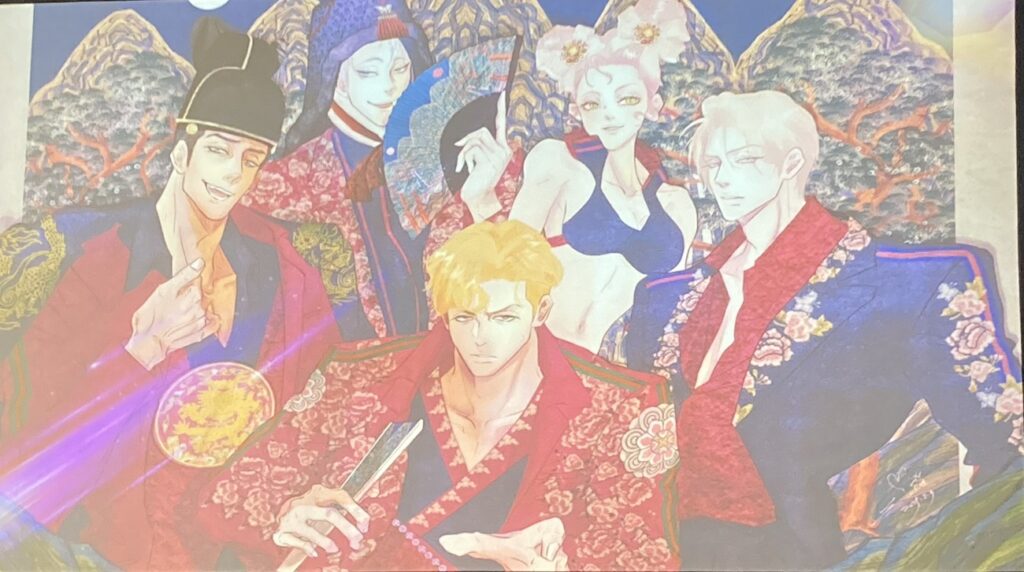
Moon: There’s a term in Korea called “gwanjong,” meaning, “someone who’s hungry for attention.” My characters have their own personalities, and they want to be loved. So every time I put on an exhibition, it’s a chance to show them off and for others to meet them. But before coming to Otakon, I did another exhibition with a student to create more opportunities for them.
Wescott: You’ve worked with students as an adjunct professor, right? How many students do you have every year?
Moon: A lot. Three different classes, 30 in each class. 200 students I work with in each semester, around 20 years old.
Wescott: Do you feel that now you’ve drawn so much, you can now help other people draw?
Moon: Being an artist and a writer, you end up doing a lot of that work alone, which is hard on you. What I want to impart to my students is how to make that easier on yourself. A lot of them do end up becoming manhwa artists, which means I can have more friends and colleagues in the industry.

