
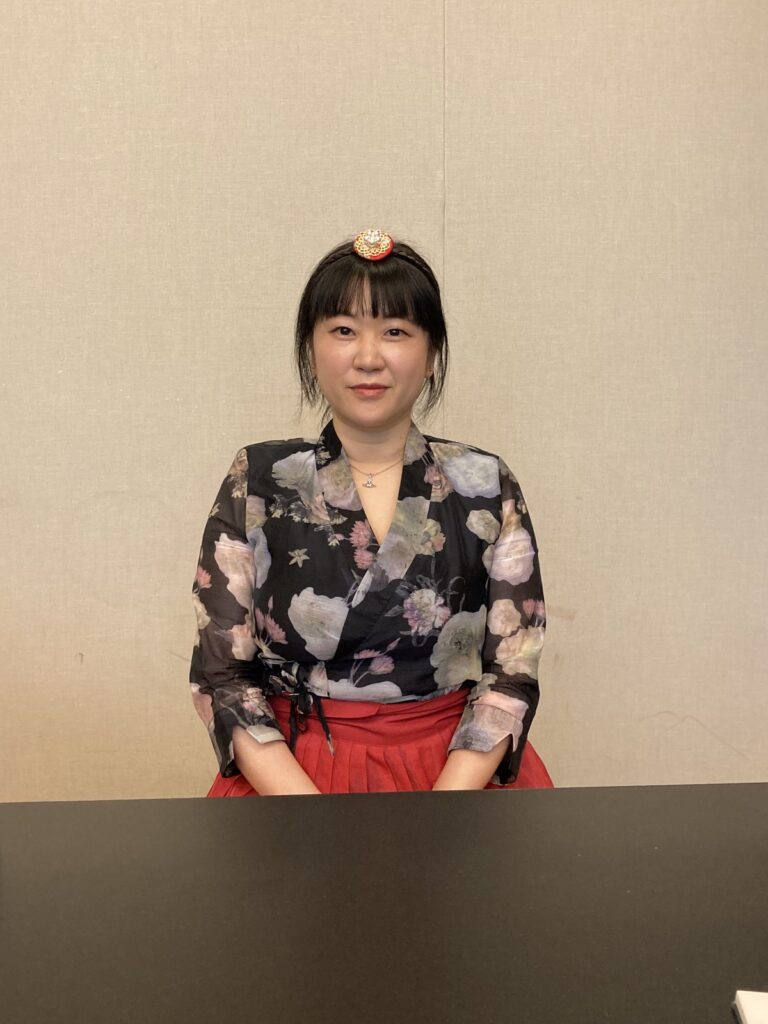
Park Seulki Rhea is a “cultural content communicator” working to preserve the history of Korean manhwa. She’s also the daughter of Lee Sangmoo, the creator of the beloved manhwa character Dokkotak that has appeared in hundreds of works. I previously saw her at Otakon in 2024, where she and working comics artist Moon Inho taught the audience about educational manhwa–a genre that is essential to the medium’s current popularity in South Korea, but is otherwise not well known in English.
Rhea returned to Otakon this year to instruct attendees in the history of various manhwa genres alongside artists Moon Taeyeon and gog00n. Before that, I had the opportunity to speak with her about her father’s manhwa, how Korean comics have changed since then, and what the medium might look like in the future. Will the webtoons and print manhwa of the present survive to be appreciated in the future? That depends on what we do now.
This interview has been edited for clarity and content.
Manhwa has been in my life as long as I can remember
Adam Wescott: When did you first discover manhwa?
Park Seulki Rhea: I’m the daughter of a manhwa artist, so manhwa has been in my life for as long as I can remember. I learned how to read hangul through manhwa, and thought everyone in Korea learned to read that way growing up.
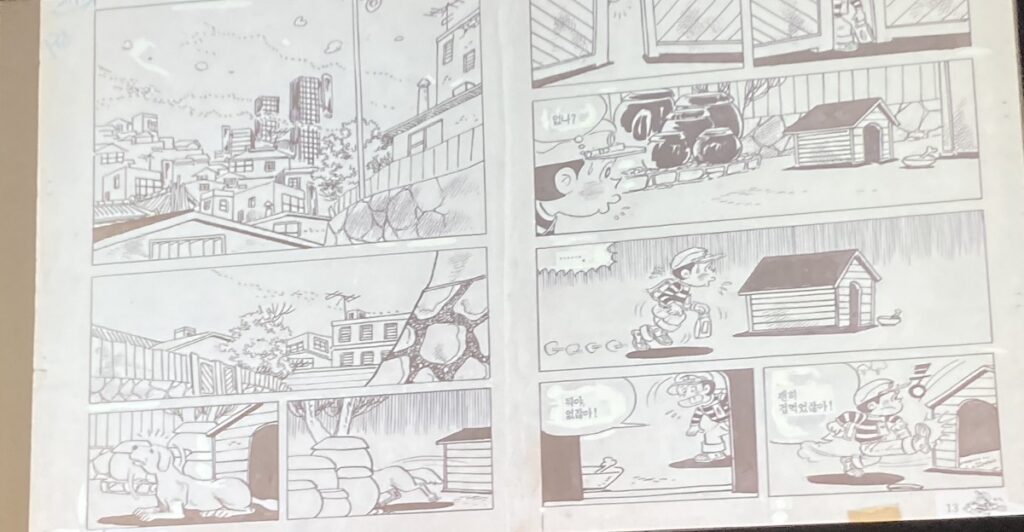
The peak of my father’s career started in the 1970s. I was born in the early 80s. When I was younger, he always wanted to spend time with me. So he bought a big house and converted the floor downstairs into his workplace. He was down there with 20 assistants there that he hired.
I had fun reading his manuscripts, because they were everywhere. Back then, they used to draw manuscripts with pencil, then follow up with pen. When the ink was dry, you would erase the pencil marks underneath. That was part of my routine since I was young. Sometimes I would try and erase when the ink wasn’t fully dry, and create an ink splatter by mistake. That was my daily life.
Wescott: Did you draw by yourself for fun?
Rhea: I used to draw often, but in private, hiding it from my father. But he found and critiqued my drawings. He’d say, “the storytelling doesn’t quite work here…” Since my drawings then were my secret diary, I stopped drawing them after he found them.
Who is Dokkotak?
Wescott: What can you tell us about Dokkotak?
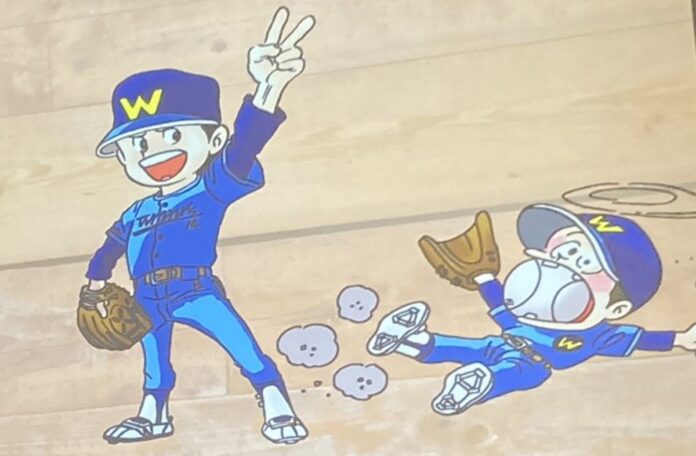
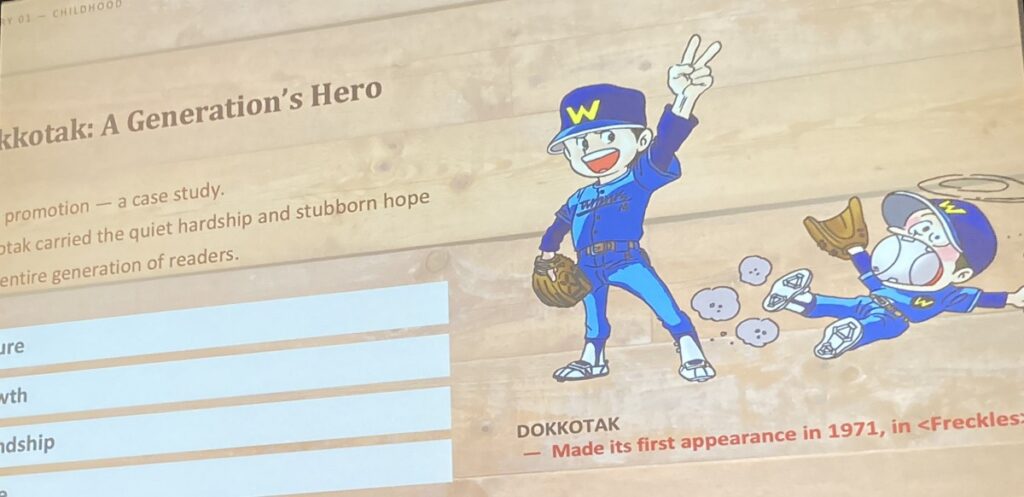
Rhea: My father used to work under another manhwa artist. When he became independent in 1971, and created his own art space, he thought, “I should create something for myself.” So he brought Dokkotak to life.
A Korean last name is usually just one syllable. My father wanted to give his character something special, so he gave him a two-syllable last name, Dokko. That is very rare. He also gave Dokko a one-syllable first name, Tak, so that the character would make a strong impression. In one month my father would work on four or five different titles, and Dokkotak was always the main character.
The titles of his works would always have Dokkotak’s name, such as Dokkotak and the Freckle. That was how he promoted the character. People would wonder, “who is Dokkotak,” and read the series themselves. Since the manhwa was interesting, they would return to read more of my father’s work. There are about 300 titles within the Dokkotak multiverse.
Wescott: Many are sports comics, but not all, right?
Rhea: It feels like many are about sports, but really it’s just 10%. The remaining 90% are drama. Even with that 10%, sports are just the storytelling method, not the main focus.
Wescott: Is there a Dokkotak title you would say is representative?
Rhea: There is a work called The Youngest Older Brother, about a family of geniuses. Due to an accident, the youngest older brother Dokkotak becomes disabled. His family hides him away. But Tak’s younger sister’s tutor sees potential in him. With his help, Dokkotak becomes better than his genius family and goes on to live a regular life.
Six major evils
Wescott: When you and Moon Inho were here some years ago, you spoke about how manhwa was once called one of Korea’s “six major evils.” How has that changed?
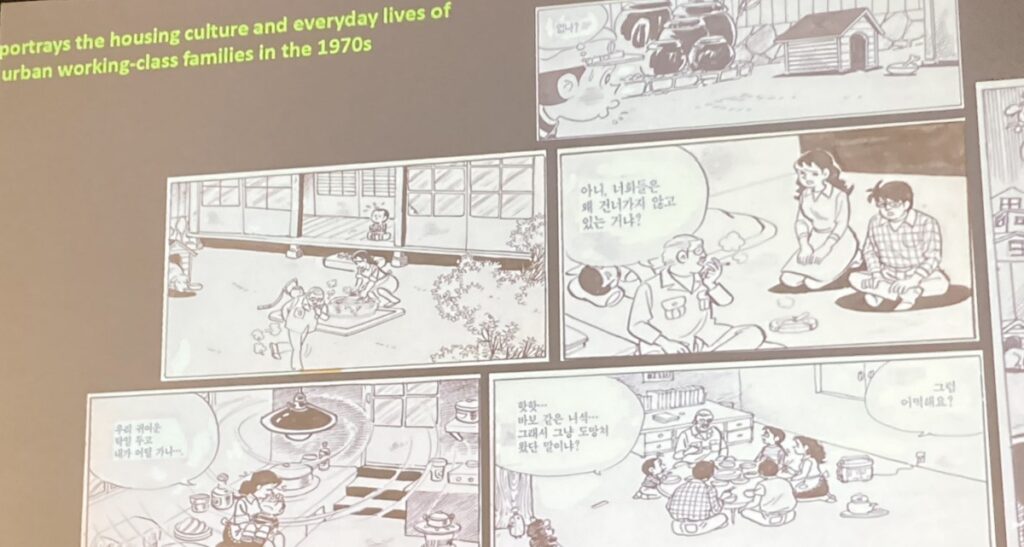
Rhea: People called manhwa one of “the six evils” through the 1990s. Now, parents tell their children they should become webtoon artists, because there are universities with majors in manhwa and manhwa creation.
When my father was alive, he was a top artist, and was treated like a celebrity. But for regular manhwa artists, their parents would try to stop them, because they could not make a living. These days webtoon artists make a lot of money. They are supported by the government as well.
Wescott: In Washington DC, you have political cartoonists who quit their jobs due to censorship by the press. So it’s amazing that in Korea, people can draw what they want.
Rhea: We already went through that in the 1970s, when manhwa artists were prosecuted for political ideas. The way they are treated now is a reflection of how we do not want to go back to that time. Korean people have fought for what they currently have. If the government tries to oppress the public, based on what has happened previously in history, they will revolt.
Experimentation in webtoons
Wescott: There was an interview with the artist Kang Full in Deadline a couple years ago to promote the Moving TV series. He said, “we used to see a lot more experimentation in webtoons.” Would you agree that webtoons have become more risk adverse?
Rhea: Back in the day, webtoons were not very organized. Artists drew and uploaded what they wanted, and if the public liked something, it would become popular. There were not the public platforms that we see these days. Even Kang Full, when he first started, would upload comics to his blog. That became the foundation for Daum, which is now Kakao.
These days, platforms organize the people who work there. Sometimes they select the artists. Platforms look at views, reviews and comments, and move the story in different directions depending on how the audience reacts. It’s not censorship. But platforms have power over the authors, especially beginner authors.
Wescott: Just like Shonen Jump!
Rhea: Platforms will promote work that is already popular. That used to be reincarnation and fantasy stories. These days shaman stories are popular. But while many artists follow trends, there are still some who go their own way. There are indie artists like Choi Insun who draw comics about the lives of women. And Keum Suk Gendry-Kim, who is very popular abroad.
Wescott: Feminism continues to be an ongoing theme of Korean manhwa made today as well.
Rhea: The current webtoon world is sensitive regarding feminism. Platforms want webtoons to be politically correct, but there are some Korean men who are very vocal about that situation. They complain about it in the comments.
My hope and speculation
Wescott: How do you think that manhwa or webtoons might change in the future?
Rhea: It’s difficult for me to answer in the public sphere. But I do have my personal opinion. My hope and speculation is that webtoons will become more diverse. Right now webtoons follow money, and are criticized for it. Even internally, platforms are thinking about how to diversify output rather than just following commercially successful formulas.
Wescott: The way that webtoons are made have also changed. Now you have studios and assistants. Is that similar to how your father made comics?
Rhea: Very different. Back then, there was one artist leading the series. Today’s studio system has a preselected art style and preselected story that the artists copy. A lot of people work on it and publish under one studio’s name. It’s very factory-like. There was such a thing as “factory-like manhwa” when my father was alive, but it was very different, more like one artist replicating their work in multiple facets.
Wescott: Webtoons are very popular abroad, and some Korean manhwa as well. But there is not very much information available in English regarding Korean manhwa history. Do you think this might change someday?
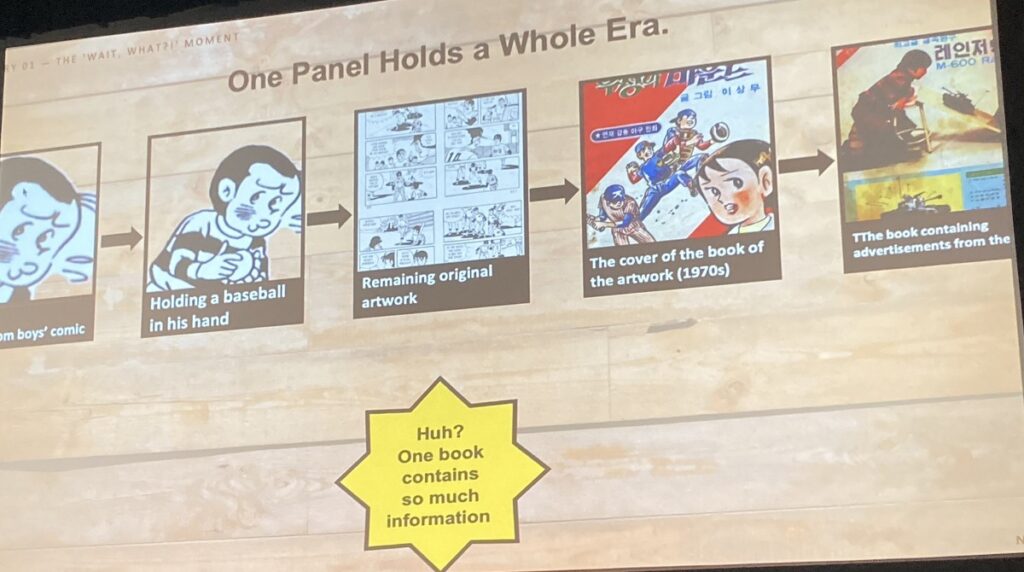
Rhea: I’m doing my best right now to change that for the future. It’s rare to find young people in Korea who can talk about manhwa. So I write columns about it, and speak to my father’s friends as well.
Korea is very good at making new things, and making those new things popular. But it’s not very good at protecting what it made in the past. BTS is hot right now, but maybe they will disappear in 10 or 20 years. Dokkotak’s prime was from the 1970s to the 1990s. He used to rank #1 in newspaper popularity polls, above Japanese manga characters like Candice [from Candy Candy] and Atom [from Astro Boy.] Kids these days don’t know about Dokkotak.
Japan and the United States keep their older cultural legacy going. Korea does not have the same ability, especially for pop culture. If we don’t change the system now, everything that is currently popular will not exist in the future.

