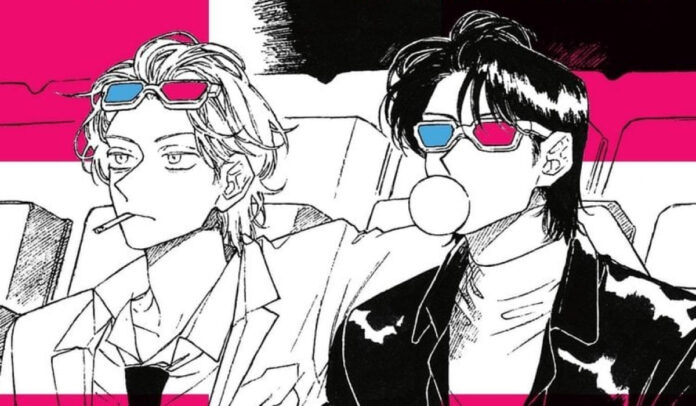
I love Curveball and Splitter! It’s such a rich story, and the art is so unique in the manhwa sphere, monochromatic and analog-looking when everything else is over-rendered full-color. So when I caught up, I followed the artist on X/Twitter, and checked out their media tab for more art.
Imagine my surprise when I saw that they draw their webcomic on paper with gel pens.
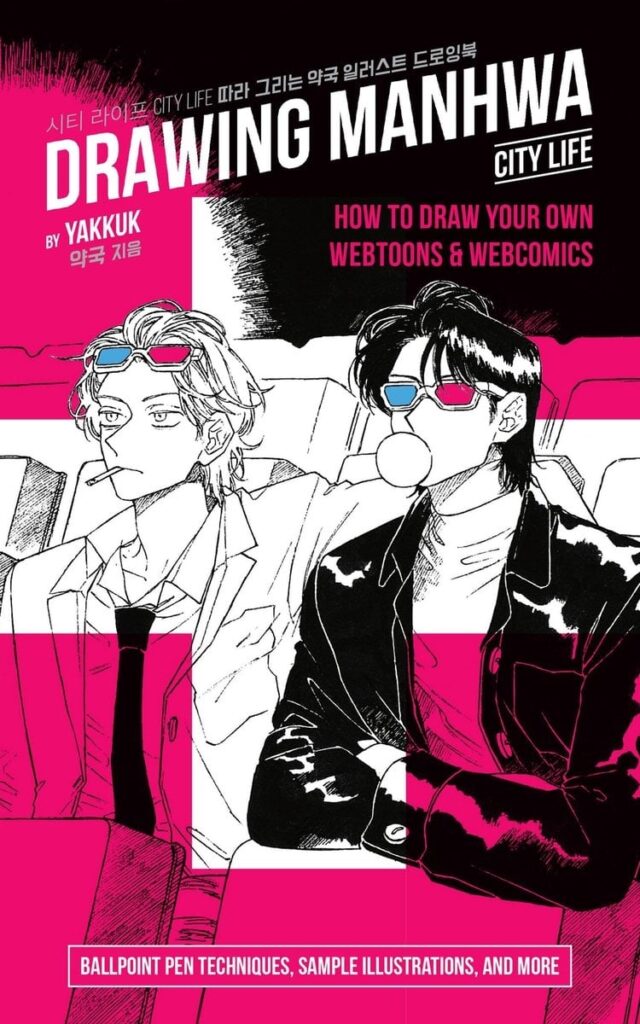
I kept scrolling and saw they reposted an announcement of an English edition of their book “Drawing Manhwa: City Life”, a book on ballpoint pen techniques.
I bought the book.
First of all, the title is misleading. This book is not about drawing manhwa, webtoons or webcomics. This is a book about pen technique for creating black and white illustrations. The back cover copy is even more misleading. There are no “blank practice pages to develop your own style”. This is a book about developing your ballpoint pen technique by tracing illustrations and completing exercises. Which is exactly why I bought it!
The book opens with an explanation of different types of ballpoint pens and the pens recommended for use with this book, followed by definitions of the technical terms used throughout to describe the techniques. I have another quibble here where I don’t think the translators… checked what words English-speaking cartoonists use to talk about inking? I assume they just literally translated the words from Korean to English, but we have specialized terminology for this process in English too. What the book calls “pen touch” is what English-speaking cartoonists call “inking,” and what the book calls “inking” is what we call “spotting blacks” or “filling in blacks.” This made the explanations confusing and unintuitive for me, though a complete beginner without that prior knowledge might find it easier to adjust.
The exercises are great. They cover contour practice, hatching, gradients, hatching to create forms, filling in large areas of black, filling in small areas of black… All the little bits you need to complete a black and white pen illustration. Yakkuk explains the best way to do each of these steps in detail, making it easy to jump in and start drawing.
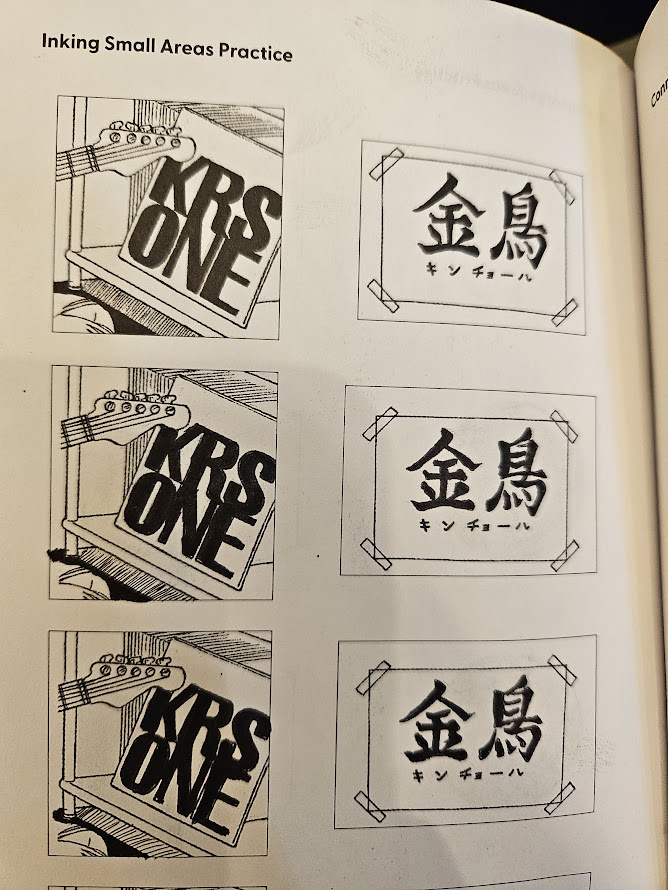
Most of the book consists of sample completed illustrations laid out next to a gray outline version of those illustrations so you know where to fill in black areas. Yakkuk breaks down the step-by-step process of inking the first four of these illustrations, after which the reader can presumably just keep going on their own.
Unfortunately, the book is bound using permanent binding, which means the edges of the pages closest to the spine disappear into it. I can’t see the edge of the completed illustration on the verso, and I can’t ink the edge of the practice side on the recto. I also have to adapt to the curl of the paper when I try to ink, which makes it harder to draw straight lines as instructed. A spiral binding or another binding style that allows the pages to lie flat would improve this experience significantly.
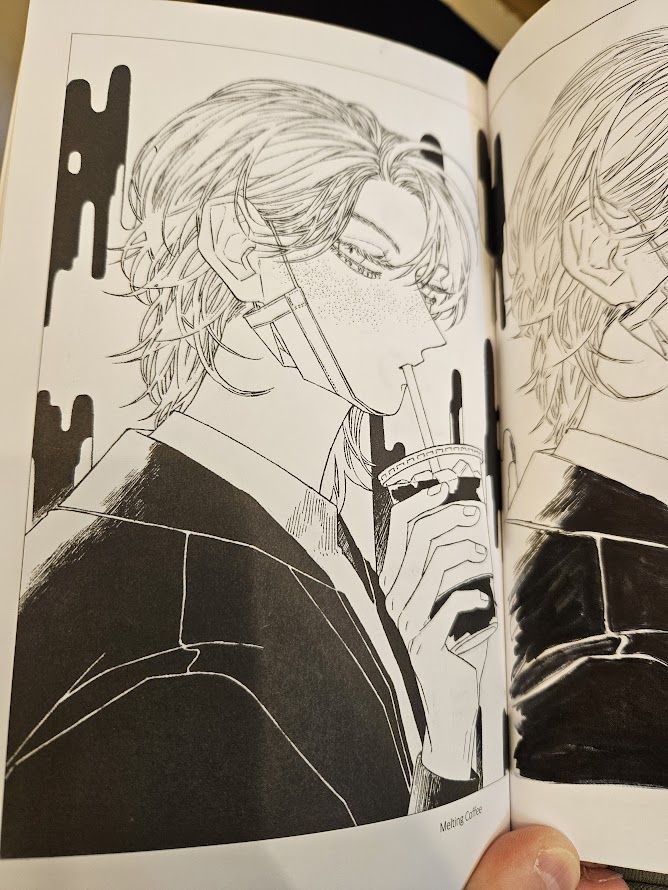
I’ve been going through this book pretty slowly (still have seven illustrations to trace), but it’s small enough that I can just toss it in my bag with a Yakkuk-recommended pen and do some inking practice whenever I have a spare moment, especially as a warm-up before I start inking an illustration or comic page. I’ve gotten much more comfortable using thin lines on paper, and I’ve learned that I really enjoy how smooth and fast gel pen on paper feels.
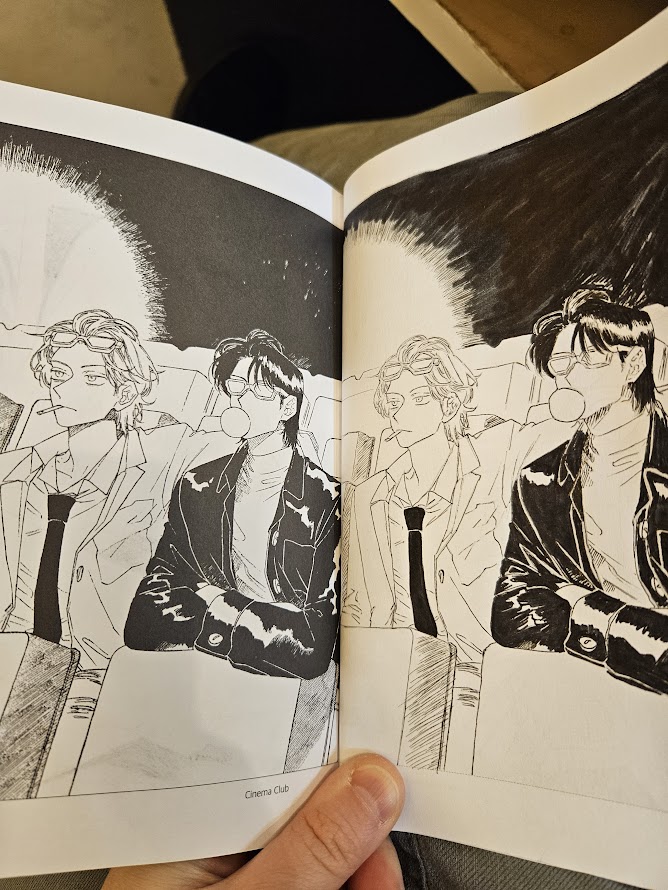
I wish the book had some guidelines on what kind of paper worked best with pen, though, because I have noticed that some of the paper I’ve tried is more difficult to draw on than the paper in the book. I also kind of wish there was more of an insight into Yakkuk’s webtoon-drawing process specifically because the illustrations are nice but I really love their webtoon and am interested in knowing how to adapt a traditional method for digital publication.
Overall, I would recommend this book. I love looking at Yakkuk’s illustrations, and the opportunity to practice drawing on them has improved my skills significantly. It’s far from perfect, but the fact that it exists in English at all is incredible. Most cartoonists I know who ink traditionally use dip pens, fountain pens, brushes or fineliners, but the smoothness and solidity of a gel pen really is unparalleled, and I’m glad Yakkuk showed me that.
You can read Curveball and Splitter on Manta.
Drawing Manhwa: City Life: How to draw your own webtoons and webcomics
Yakkuk
Ulysses Press
Translated through Shinwon Agency Co.
$14.87
Link to purchase

