
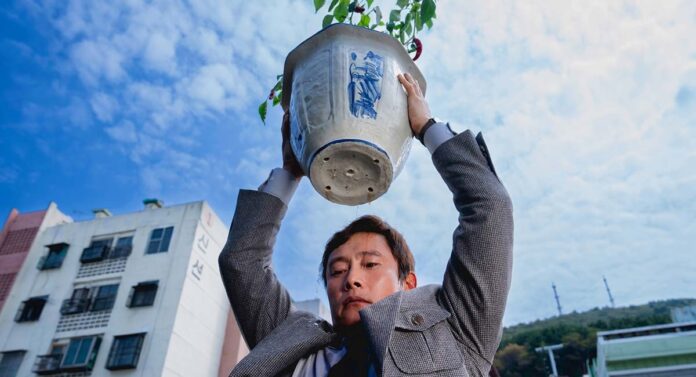
Like David Lynch and his women in trouble or Guillermo Del Toro and his love for monsters, desperate people fill the films of writer/director Park Chan-wook. He loves putting people into impossible circumstances and then driving them to do terrible things. His latest film, No Other Choice—an adaptation of The Ax by Donald Westlake—is no different. It might be his most crowd-pleasing film to date, but No Other Choice certainly ranks among his darkest.
Times have become tough for Yoo Man-su (Lee Byung-hun). An American company bought the paper company to which he dedicated his life and cut his job. A paper man his whole life, he’s stuck trying to find work in a shrinking industry. His wife Lee Mi-ri (Son Ye-jin) struggles to pay bills for their lifestyle. When she declares they need to sell his childhood home, he’s devastated.
One day a simple thought occurs to him: What would happen if “accidents” happened to his professional rivals? If they weren’t there, surely he could secure a new job for lack of better candidates. So Yoo begins to carry out a dark plan to get a new job by any means necessary.
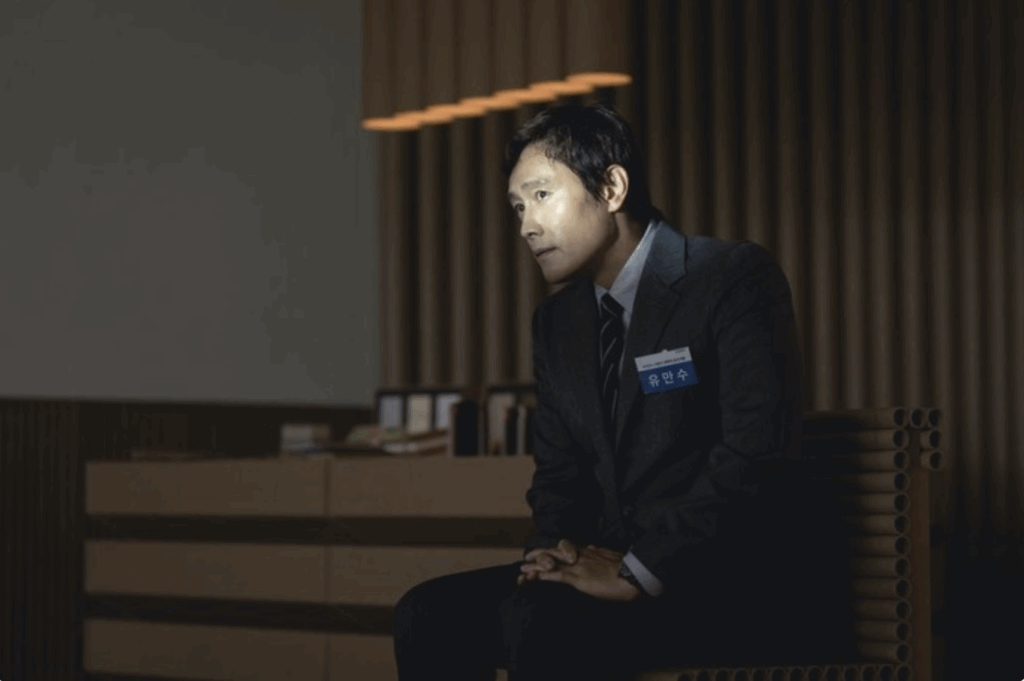
If the plot doesn’t clue you in, No Other Choice carries a strong anti-capitalist vibe. Taking a cue from his contemporary Bong Joon-ho’s playbook (this would pair well with Parasite), Park crafts his most explicit and effective social satire to date in this film. Capitalism chews up workers and turns them into pulp like nothing else.
That bleak vein of dark irony runs deep throughout No Other Choice. Various characters repeatedly say the title throughout the film, like a mantra. The Americans and Koreans who believe they need to reduce their workforce due to automation. The former paper men, including Yoo, who can’t imagine a life outside of their industry.
The irony, of course, is that there are options for these men. They drown in what they see as professional failure rather than recognizing that the system failed them. Work is their life and life is their work. The idea of doing anything else seems alien and obscene.
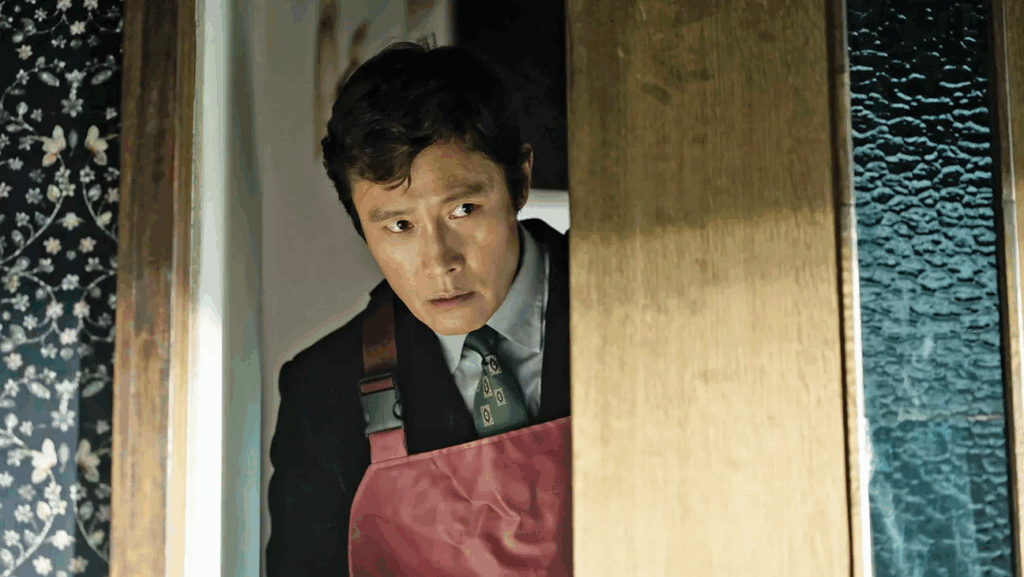
Lee Byung-hun’s performance as Yoo Man-su brings this to both sympathetic and terrifying life. His performance weaponizes what sympathy we have. He may try to convince himself there is no other path for him to go down even if others consistently appear.
For his character, murder is a means to securing employment and a way to care for his family. At least, that is what he believes. As the murders get more absurd (this is a surprisingly slapstick film), Lee’s performance becomes increasingly self-deceptive. A lesser actor would falter under the weight of such a complex character, but Lee makes it look easy.
Yet the film really doesn’t work without Son Ye-jin as the long suffering wife Lee Mi-ri. Yoo may think he has no other choice in what he does, but it’s Lee who really doesn’t because of his actions. This is a woman trapped in a life she never asks for because of her husband. Could she leave him? Sure, but then she feels she has no choice but to be the good wife. It’s a quiet performance but one that only elevates this film.
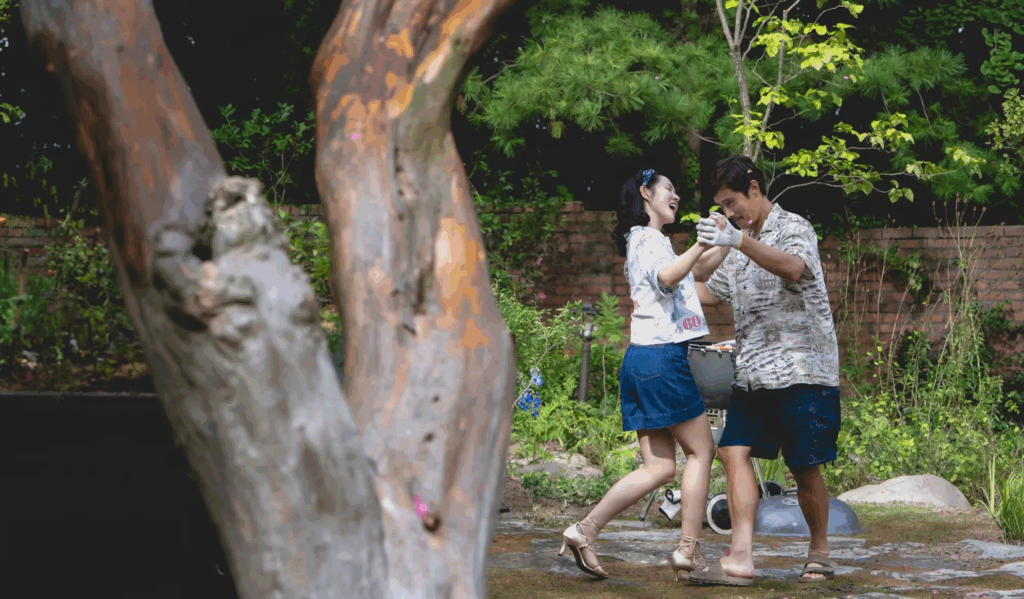
That’s what makes No Other Choice one of Park Chan-wook’s greatest films. There is a quietness here that Park hasn’t explored previously. The most horrific violence is on a metaphorical level rather than a visceral one. The film might lack the obvious bombast of his other work like Oldboy, The Handmaiden, or Decision to Leave, but it certainly matches their bleakness.

