
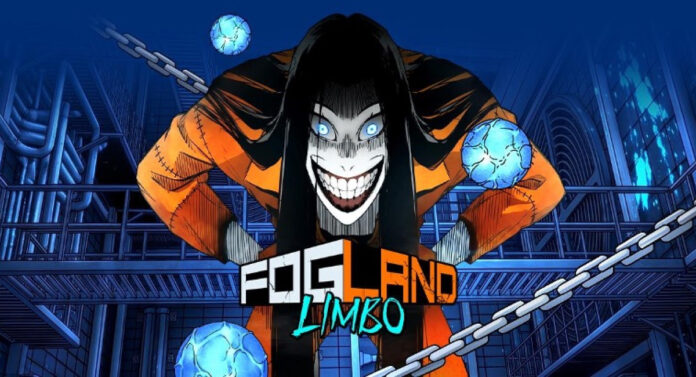
Fog Land is WEBTOON’s next big IP that is being marketed heavily by the company. It has become quite popular in South Korea and other locations overseas. And when WEBTOON appeared at New York Comic Con 2026, they brought Fog Land with it. Promotions included actors cosplaying as various prisoners from the series, collabs with desk mat companies, digital advertisements in the NYC Subway and on trucks, as well as the WEBTOON booth having its design based on the series.
The creator of Fog Land herself, Pogo, even made an appearance during NYCC ’26, and we here at K-Comics Beat were given the opportunity to interview her during a dedicated roundtable interview.
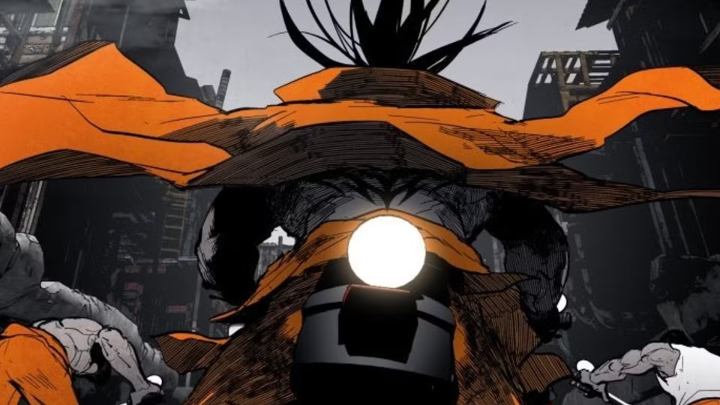
CRYSTAL BELL: I like that in Fog Land that it’s the combination of science and also the supernatural. Do you see those as opposing forces in the story? Or are they connected?
POGO: I really like science and theology and combining those things together. In this story, by synthesizing those two elements together, I can use science to explain theology while using theology to explain science and philosophy and all things like that. Putting those things together makes the foundation of what I really enjoy.
LUKE SO: You’ve mentioned a love for science and you chose a sweet potato for Dante’s first lesson and later 182’s obsession. There could have been any other experiments so why choose a sweet potato?
POGO: When you look at a sweet potato, it doesn’t seem like much. But i’ve had experience raising potatoes, or growing potato’s. I don’t really have a green thumb like remembering to water things or take care of them.
But I did remember to put a sweet potato in just a cup of water and it didn’t have much sunlight and seeing it grow, there is something about it that’s kind of like the discussion about the environment, nurturing, and how something can survive, grow, and within Fog Land it kind of also reflects 182’s ability to survive and grow in this very difficult environment. That’s the kind of thing that I went for.
LUKE SO: I can’t wait to see the ending when the potato finally grows and 182’s grown up too.
POGO: I’ll make sure to show that to you.
JUSTIN GUERRERO: I heard you love EDM music, so i’m curious if your taste in music has shaped or had any influence towards your art or even for Fog Land?
POGO: There is a lot of connection between the two. EDM itself has this sort of strangeness to it and at the same time this artistic-ness. Within the story of Fog Land, you have these stranger than normal people and somehow the music sort of reflects the storyline while also the storyline reflects myself as a person who makes EDM music. So together they work really well together.
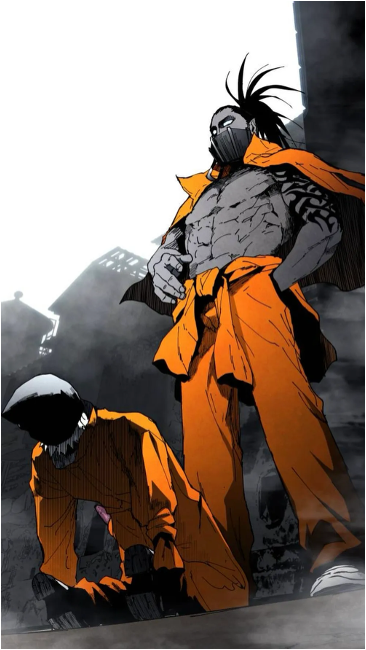
BELL: I want to talk about the “fog” because it is this thing that enhances people’s abilities but also has really horrifying consequences. So is there something that has inspired it and also how you’ve imagined it working?
POGO: So as you’ve guessed fog is pretty much inspired by real life drugs. While drugs you know they kind of give that high, that good feeling, but it also has really bad side effects. People lose their lives, they lose themselves to drugs. So the more addicted you get, the further you get from escaping.
So for example with the character Dante, he does not use fog and that’s a very important and key point as he’s trying to help other’s he avoids using fog to help others. That’s something I did not want to glamorize as drugs will appear in this story as something that is evil. And that’s a key part of that character in the story.
SO: Despite their debut later in the webtoon, Technologya and Gonzalez were honorable but you have Rambutan and Richie who are traitors. How do you balance their roles between who has redemption or betrayal when you first created them?
POGO: I think when talking about characters who are good or evil, I don’t think of it as an absolute. But it’s the sense good is more like thinking further ahead, like not just myself, not just what’s immediately in front of me. While evil tends to be more portrayed as thinking only about the immediate or myself.
So, for example, even in the case of Rambutan and Richie, those characters are not depicted as evil per say, but because they are thinking about escaping right now they end up using others. Which is what makes that evil, and that is sort of how i struck the balance between the two.
GUERRERO: What artists, comics, or pieces of media have inspired your art style and especially for creating the world of Fog Land?
POGO: As an artist my general art style has been the result of working on my art style over the years. In terms of Fog Land one thing that always influenced me was the video game Hotline Miami. The sort of gangster and psychedelic colors and art style I have really tried to use within my art.
BELL: When did you realize that Fog Land was building a real fandom?
POGO: When it launched in Korea, it took a while for the actual audience to build. But outside of Korea there was already videos on TikTok, people were reading it through not so legal means, and they were already creating a fandom long before it had even launched in English or other languages. It was happening very very quickly so I was very surprised to see that the reaction elsewhere was so quick.
SO: When Dante first enters the prison, he does so as a teacher, but as he goes against the prisoners he is afraid. He later learns that not every prisoner is as evil as he had thought. How do you write a character who believes in fair chances but is also afraid whenever he has to go up against a new prisoner?
POGO: At some point I sort of started studying psychology and the psychology of the people around me, and people with low self-esteem sort of have ways to defend themselves. The character of Dante with is this sort of arrogance of “I can change these people” and “i can help them out” has this sort of protection for his low self-esteem. What happens as we see in Fog Land is every time that he faces a prisoner, he breaks each layer of his shell, and that’s kind of what I want to show with the story.
GUERRERO: You mentioned that you found out some of your readers discovered Fog Land through illegal means before there were official access to the webtoon overseas, how did you find out about that and if that had any effect on the growth of Fogland’s readership and popularity?
POGO: So what was really obvious is for fans elsewhere, even if it hadn’t launched outside of Korea, also in Korea the series is locked down under an age-gate so for fans who were not in Korea to try and access these titles would be very difficult. So I had to assume it had to be through illegal means. I wouldn’t say the pirated versions didn’t help bring recognition of the series outside as well as you know there are other countries it hadn’t launched yet in either. So there is a fandom out there that does exist so it isn’t an entirely negative thing I guess.
BELL: Clearly you are a fan of a lot of things. You love science, some of your past work has been about technology, you love psychology and theology, so many things. But what I want to know what are some of your foundational fandoms that have led to where you are now as a creator and artist?
POGO: In college I went to a religious school that had a chapel, not intentionally, it was just a major that I had studied and taking theology classes I was like “this is very interesting. This is very fun even.” When you read the bible you may think that with some of these stories someone probably made them up, that these are just fake, but at the same time in the past there might have been scientific reasons for why people have believed these things could have actually happened.
That this is somebody’s life story in some kind of way, and I had the same thing with science. I always just interested and I found science fun, I always dreamed of being an astronomer when I was young. I was interested in the science of space and I think that was what the foundation was. I wanted to see and understand the world, space, and everything to see the big picture.
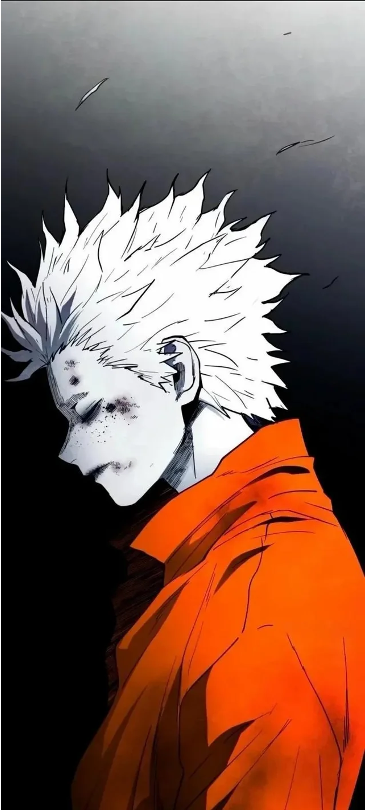
SO: So in real life prisons, you are mostly in a cell and you can’t get out. But in Fog Land, the characters live freely and they are building homes and villages. So when you compare everything is the idea of a prison just a state of mind? A place? A thing?
POGO: That is a very sharp and intuitive question to ask. Within the story the big metaphor is really clear. The prison could be for Dante for example, his family is probably a prison, his brother could actually be like a prison guard in a strange way.
Fog Land is taking these extreme metaphors of how our current and modern society is, and thinking about how the people can’t do what they want to do, can’t be themselves, and perhaps how people treat each other. Maybe that’s the prison. Maybe that’s the hell. Things like that is definitely part of the metaphor for the story.
GUERRERO: When you’ve made Fog Land a mature rated comic, did you do so aware that the age-gate could affect readership compared to non age restricted series. Despite that, were you surprised that it still managed to achieve such a huge following despite being a mature rated webtoon?
POGO: So with the age restriction, people will still read it as adults who can handle the story. But mainly in making it age-gated or age restricted, I just wanted to make sure that I could express the lowest, the most evil that I could within the story. That would mean the story would have to be age restricted.
Of course I have not yet gone to the deepest levels of humanity myself, and even now the editors at Naver told me that you can get more violent, and that you can get more depressive. So I could probably do more but that’s mainly what I’ve been able to express the story as best that I can when I felt when age restriction the series was needed.
Stay tuned to K-Comics Beat for more news from NYCC ’26!

