
On Tuesday September 22nd, the Japanese digital drawing software Clip Studio Paint suddenly private’d thousands of assets from their Asset Store, citing concerns of inappropriate content for their global audience.
Clip Studio Paint is the most popular software for making comics, manga and webtoons and webcomics today, and the robust Asset Store is a major reason for its popularity. From 3D renders of complex background environments to brushes to pose references, the Asset Store is filled with tools to help comic creators and illustrators speed up their work process. Or at least, it was.
Disappearing assets
Artists all over the world were stunned to discover that hundreds of assets in their personal Clip Studio Paint libraries, including those purchased with real money, were suddenly inaccessible to them. The assets in question had been private’d and removed from the Asset Store for violating new, nonspecific content guidelines. The majority of assets affected were pose references featuring two people interacting at any level of intimacy.
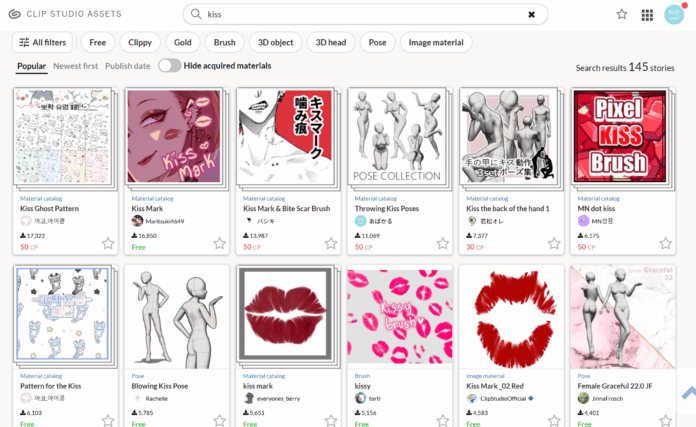
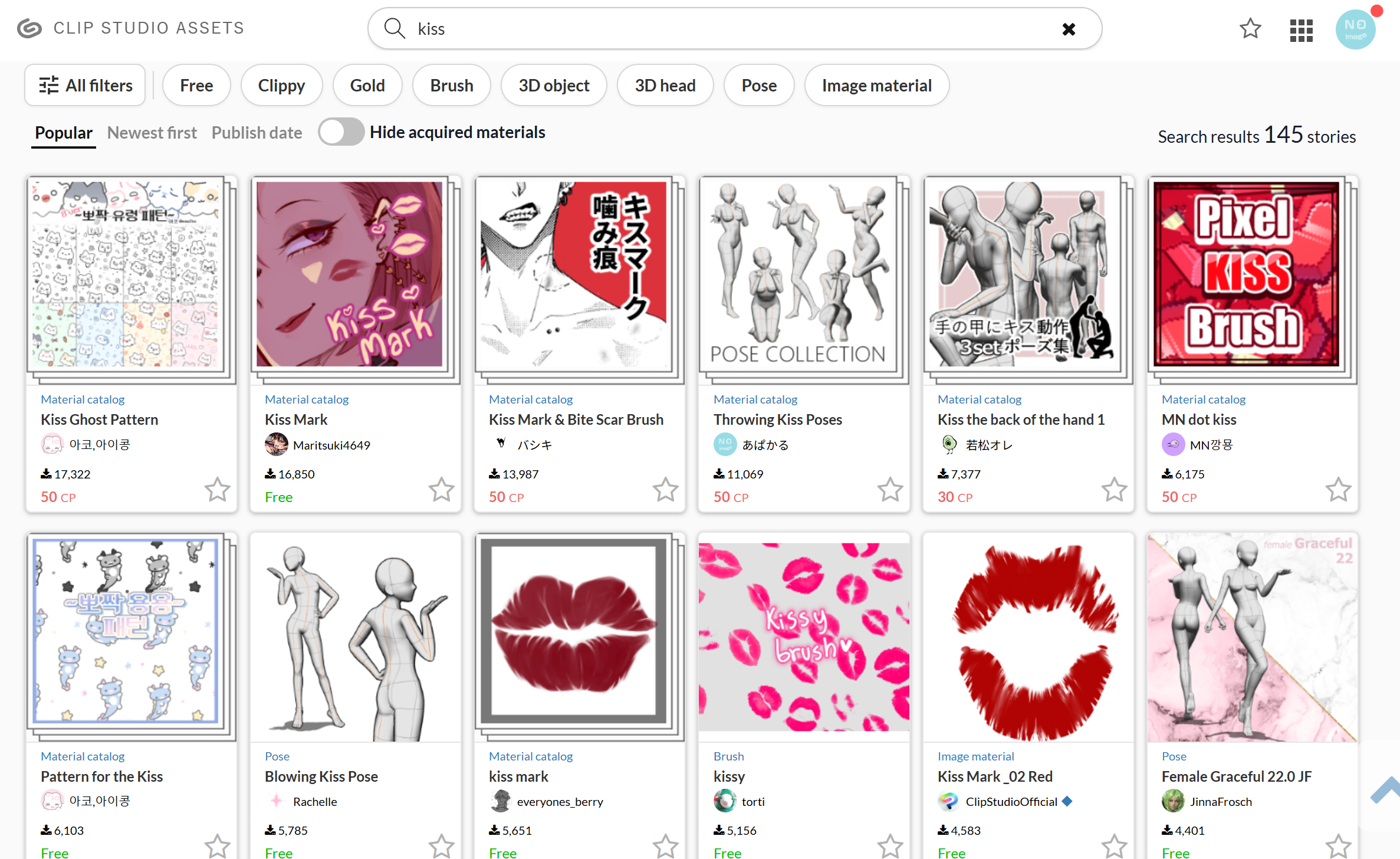
Doodlemancy on Bluesky reported a set of ballroom dancing poses were removed, while other posters noted that every pose featuring two people kissing was removed. The number of assets tagged “kiss” in the Asset Store went from thousands of options to 145, with most poses of solo characters blowing kisses or characters kissing the backs of others’ hands.
Additionally, brushes with “inappropriate” thumbnails and other assets were also swept up in the mass-deletion. A Japanese Clip Studio Paint user posted to Twitter that the illustration of a character in a swimsuit they’d used as a thumbnail for an asset was private’d, even though they’d set a rating for the material. Clip Studio Paint has a mature content filter for their asset store, and asset uploaders can mark their assets mature if they think it’s necessary. But despite the existence of this filter, Clip Studio Paint still found it necessary to private hundreds of materials that may or may not even be considered mature content.
Social media posters are accusing Clip Studio Paint of blaming overseas users for the demands of payment processors, while Japanese users are advocating for banning international users from accessing Japanese assets entirely.
Clip Studio Paint’s statement
In an official statement posted to Twitter by Clip Studio Paint, the company stated:
“We recognize feedback from creators expressing that it is difficult to tell which specific elements are affected and how to modify materials for re-publication. We will provide clearer explanations in light of any changes to evaluation criteria, along with more concrete examples to make it easier for creators to check their materials before posting.
“To support a wide range of creative expressions while ensuring user safety, we are working on ways to improve Clip Studio Assets. This includes plans to strengthen the system to include age restrictions, regional controls, and user preferences. Our goal is to enable creators to publish their materials to the appropriate audiences without needing to remove materials completely, so it can remain a safe and reliable service for both users and creators.”

