
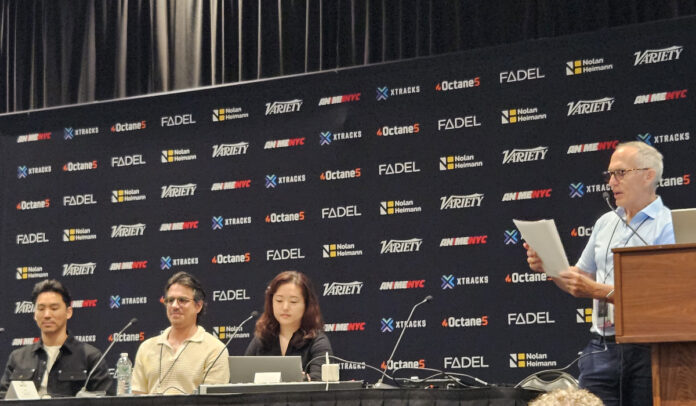
The licensing summit at Anime NYC featured two presentations focused on Korean content: Bernie Cho on the popularity of K-pop, followed by a panel discussion with Young Park of The Parks Agency and Alex Carr of Tapas entertainment.
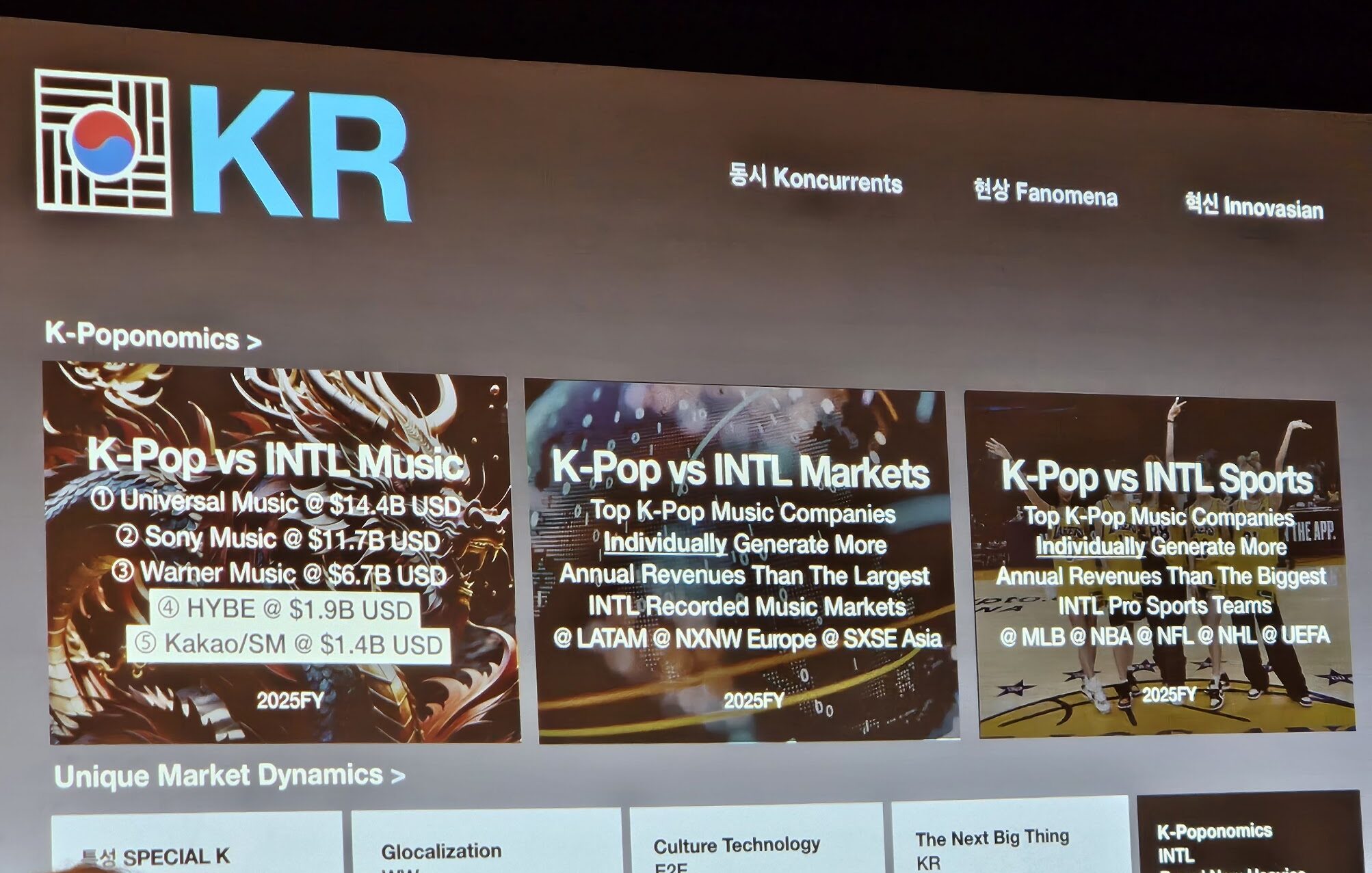
Cho’s presentation focused on showing just how big K-pop is internationally: most K-pop fans are not Korean or based in Korea at all. Using a variety of statistics and examples, Cho demonstrated how Korea is #1 in the 2024 Soft Power Index published by the IMF. By engaging and welcoming international fans via live events and social media, collaborating with Western songwriters, and inviting multicultural artists into the K-pop industry, South Korea has become the third largest musical export power in the world (after the United States and the United Kingdom).
Korean music companies are also vertically integrated and diversify their income streams, so while Western record labels only make 3% of their revenue from merchandise, Korean labels make 26% of their revenue from merchandise and licensing.
The presentation was very well designed, and Cho used clever portmanteaus like “innovasian” and “glocalization” to make it memorable.
The panel discussion “From Webtoons to Worldwide Fandom” featured presenters from two different sides of Korean web entertainment. Young Park of the Parks Agency works with Korean creators directly to help expand the reach of their IPs, with a particular focus on independent Korean animation on Youtube. Alex Carr is a Vice President at Tapas Entertainment, following a long career in graphic novel publishing and digital publishing.
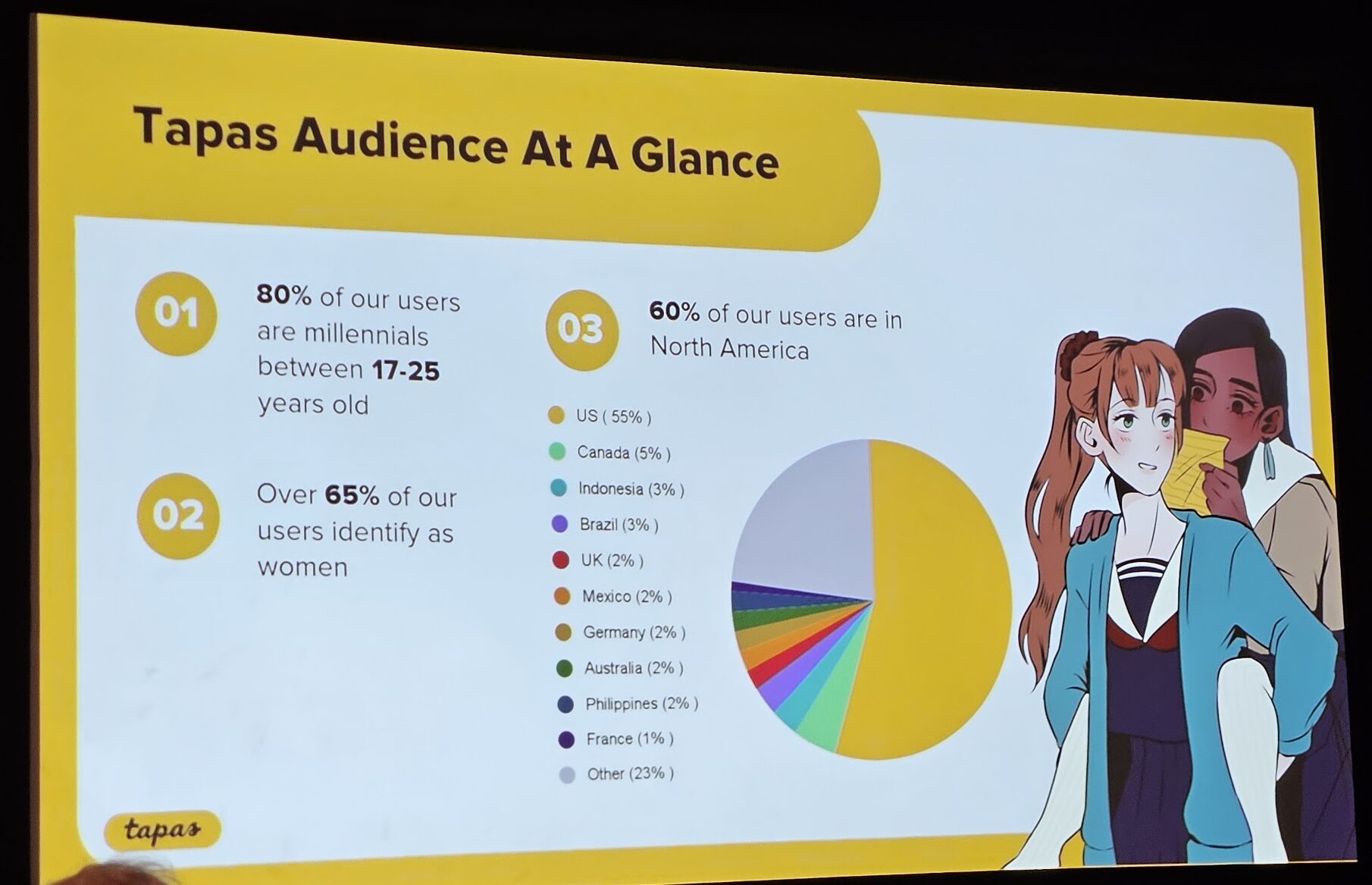
Carr emphasized that Tapas is a revenue-focused comics platform, as opposed to other platforms that are free-to-read focused. Their biggest segment right now is licensing.
Something that stood out to me about Carr’s presentation is that it was decorated with a spot illustration from the Tapas premium comic kids being kids, which went on indefinite hiatus in 2020 and made me wonder when the presentation was last updated.
Carr emphasized that the webcomic-to-print pipeline is not all Korean comics (citing Heartstopper and The Beginning After The End as examples), and that the most important thing to remember is that longform serialized content takes a long time to build an audience.
TBATE was acquired as a Tapas premium novel in 2015, and the second season of the anime adaptation launched in 2025, a full ten years later. They’d also recently signed their most lucrative deal ever for a brand-new Audible original from TurtleMe. What licensees should look at is the conversion rate from free to paid readers. Engagement rate, stickiness, completion rates are all important, as niche series with devoted fanbases ready to spend can get licensed. At AnimeNYC, Tapas is promoting the print edition of Daughter of a Thousand Faces by Velinxi, published by Inklore.
Park talked about how a lot of Korean animation was for preschool-aged children, but as the birthrate continues to decline, the market for such animation is shrinking. To solve this, the early childhood animation characters are turned into memes and character goods, collaborating with Pop Mart and K-Beauty brands to give them a presence outside of the cartoons. “Koreans love cute things,” said Park, “but looks can only take you so far.” A cute series with a strong story, like the Chiikawa franchise, is the ultimate goal. A major obstacle for a lot of these creators is that their videos are only available in Korean, and independent artists often lack the resources for multilingual subbing and dubbing. I was surprised he didn’t mention Alien Stage, as that’s the biggest independent Korean animation series I’ve heard of and I thought it would be relevant to the discussion.
Both panels emphasized that Korean media is worth paying attention to.

