
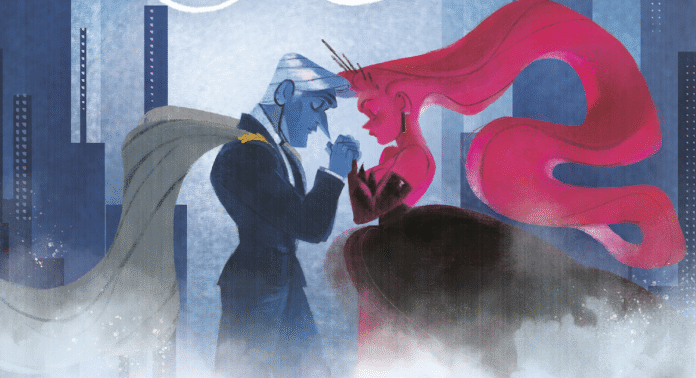
If you possess even a passing interest in the wide world of webcomics, you’re already well aware of the legendary WEBTOON series Lore Olympus by Rachel Smythe.
A retelling of the myth the abduction of Persephone, Smythe began the series in 2017 before it was relaunched on WEBTOON Canvas in 2018. The series was eventually awarded two Eisner Awards, two Harvey Awards and two Ringo Awards, among many other well-deserved accolades. Lore Olympus concluded its online run in 2024, and the eleventh and final physical collection was published by Inklore in October 2026.
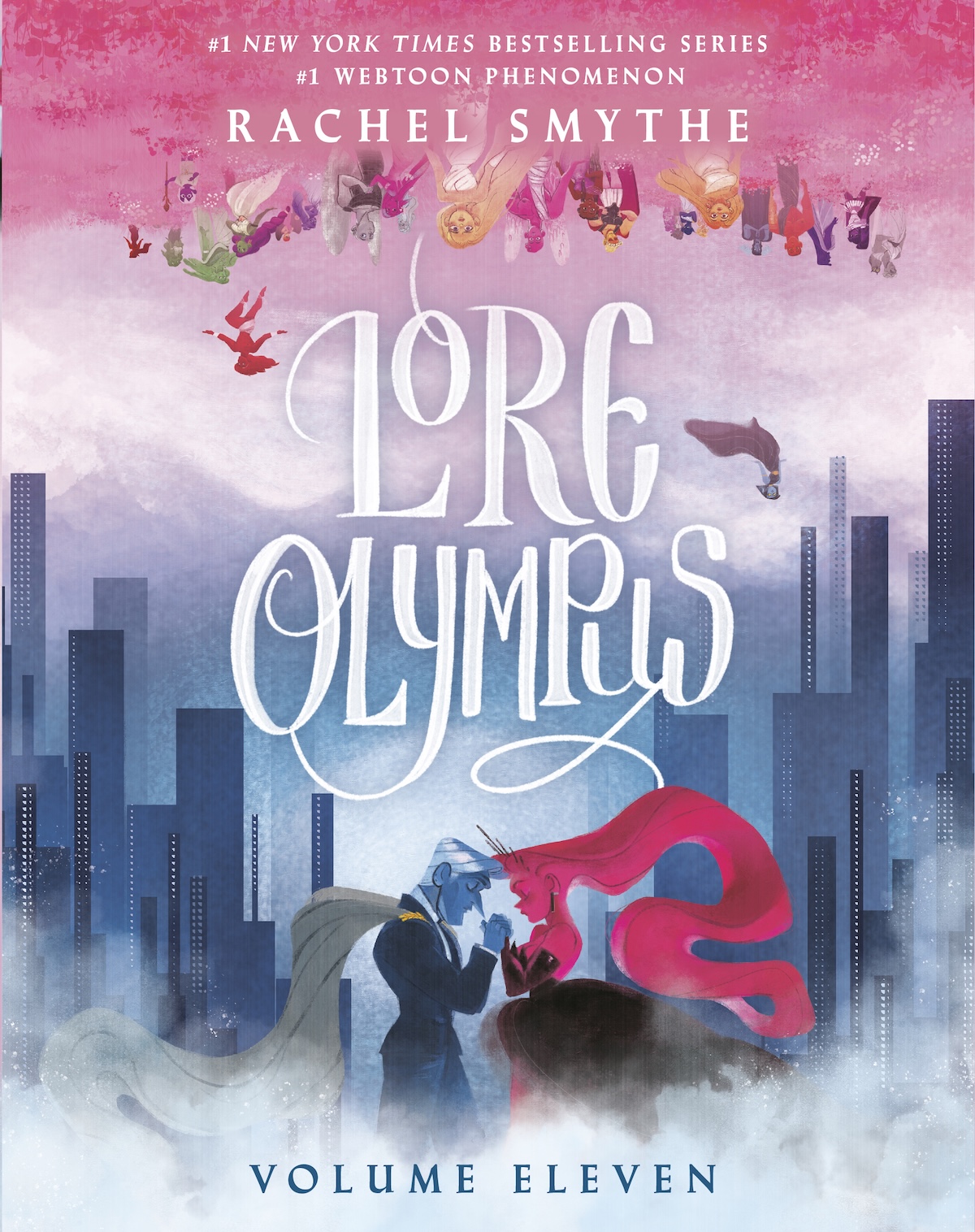
To mark the occasion, K-Comics Beat caught up with Smythe over Zoom. We asked all about her feelings on the completion and collection of the series, about her advice for up-and-coming webcomic creators and about what kind of Lore Olympus merch she hopes to one day see in the world.
AVERY KAPLAN: First, I just want to say congratulations on reaching such an incredible milestone. How do you feel about having the entire epic story of Lore Olympus not only concluded, but now collected?
RACHEL SMYTHE: Good. I feel really good about it.
When it concluded on WEBTOON, I said, “Yeah, here are all of my big feelings.” Having the books still in production made the ending of the project a lot softer for me. Finishing a project can be kind of violent on the old system, because you’re so used to doing it and suddenly you don’t have that anymore. So having parachute of the books to carry on with was really good.
At the time, I said, “Yes, I’ve processed my feelings towards this project and it’s done.” And then the final book came out and I had more feelings about it. And I said, “I thought I was done. I thought it was over. All the feelings that I thought I could have.”
Apparently, there were more. So yeah, no, it feels good to have it put to bed now, though.
KAPLAN: Has seeing Lore Olympus collected in a physical format affected your perception of it at all, and/or affected your perspective as a creator in general?
SMYTHE: Yeah, I think absolutely.
One of the things that is really fantastic about publishing direct to the internet is there’s an accessibility there for people, and it’s very immediate. So, within the landscape of different types of avenues to publish, via web is always the quickest. Unlike TV shows or books or traditional publishing, where it takes a couple of years for it to get out there.
So you have this very immediate way to present your story to people that can really be intertwined with the social consciousness in that moment. I think that’s a really cool thing.
However, the downside to that is I think that we – and I don’t even mean just the readers, I mean even myself – I think you get so used to being able to look at the work at a glance. And I remember even when I’d finished a chapter and I get it set up in that long scroll, and then I chop it up. And I’d ask myself, “Is that it?”
But really, it’s a lot of work. It’s a lot of work to have done in a week! And I think you at times can lose that feeling. But seeing it as books makes you realize how much work it actually is.
And I do have something anecdotal to be obnoxious with. Recently we had some of our friends had friends come through from the States, and they wanted some copies of the books. And they said, “Yes, we’d like the hardback books. If you sign them, we’ll take them back to the States.”
I said, “How lovely. But they’re gonna be really heavy. I don’t know if you’ll be able to take them on your carry on. They’re quite heavy.”
And I don’t know how accurate this is, and I feel like perhaps I’m being teased, but it also might be true: they worked it out to be roughly all 11 hardback books at 22 kilos, which is 48.5 pounds.
I feel like there’s almost an existentialism there where I lie there at night and I’m like, I had 22 kilos worth of thoughts and there they are. That’s how much seven or eight years worth of work weighs: 22 kilos. I just keep having that light circulate in my mind.
The first book in particular, I know there’s 25 chapters in it, so there’s 25 weeks. There’s 25 weeks’ worth of work in the book, condensed. So, it’s kind of crazy to think about it like that. It’s like a trophy that you get at the end, so that’s nice.
I mean, I hate to be like, the book is just the little trophy that you get in the end, because books are very important, you know. But there’s elements of that in there, where I get to have this nice thing that represents all of the time of me sitting at the computer, noodling away day in, day out. It gives me an opportunity to slow down and take a look at what I did.
KAPLAN: Looking back over the series, is there a moment in Lower Olympus of which you are particularly proud? Does anything stand out as having presented a particular creative challenge?
SMYTHE: You know what? I know this kind of sounds like small potatoes, but every time I finished a chapter and got it out every week, it kind of felt like a miracle.
Because my working memory isn’t very good. And I remember even in the very, very beginning, chapter one, I was asking, “How am I going to make a whole bunch of chapters? I don’t believe that this is going to happen. I know that probably there’s somewhere in me that can do this, but it just feels like the idea of like making even 10 chapters felt like such an impossible task.” Every week.
I’d say, “It got done somehow. There is a chapter.” I heard later on, when you’re in the throes of learning how to be a professional artist you have to look back and say, “Look at this thing that I completed because that gives you a sense of confidence.” Knowing that you can complete something.
There’s a lot of advice out there on how to write and how to draw and all of this stuff. But I think one of the main things that’s super important is just how to finish. Finishing a project in any capacity is really difficult and it’s one of those things that I don’t think gets discussed enough is the ability to take an idea through and work through that.
Because there’s a painful hump anyone in the creative industry (or outside of it) understands: if you’re writing or drawing, there’s this point where you say, “This feels bad and they don’t like it” and you don’t want to finish. And it’s never going to be exactly how you want it to be. And you just psychologically have to work through that.
I think that’s the thing that does not get discussed enough. Sometimes it just feels bad until it feels good and you get done.
KAPLAN: Do you have a favorite fan interaction, either in person or online?
SMYTHE: There’s been a lot of them because the people who read Lore Olympus have been very, very nice to me.
There was an episode that dropped where Hades and Persephone kiss for the first time. It was quite a moment. And there was somebody who took a clip from RuPaul’s Drag Race, I believe it was All Stars Season 3 with Aja. And it’s when Aja jumps off the box.
And this fan did a meme with Aja jumping off the box. And they wrote all the different communities, and it was so cute because they acknowledged all the different Facebook groups and the Discord and stuff.
And I remember it all the time. It just gives me the warm fuzzies to think about because I really like Drag Race and I knew exactly what the meme was from and I was so stoked.
And once lots of people got together and made me a big signed birthday card that was 12 pages long. It was really long! And I said, “This was so nice.” I cried when I got it because it was really sweet. And it was filled with lots of lovely messages. And I thought that was really cool.
It’s always nice to go stateside and do the signings because most of the time I’m really far removed from a lot of the stuff that’s going on. When I used to go look at the reader numbers in the States for Lore Olympus, I’d realize, “Wow. There’s more subscribers to Lore Olympus than there are people in my country.”
It’s too much to fathom. I think you just get to a point where I say, “There’s too many people” and my brain just turns it off. And, I can’t lie, it’s too scary to think about, because it’s just such a vast quantity.
I have no idea what’s going on in the world. I’m just hammering away in my little office, noodling away on my projects. So when I go to a signing and there’s all these people and they’ve traveled to come see me and they’ve waited in line for a really long time… That’s really nice. It’s such a sweet and kind thing to do and I always really appreciate those interactions.
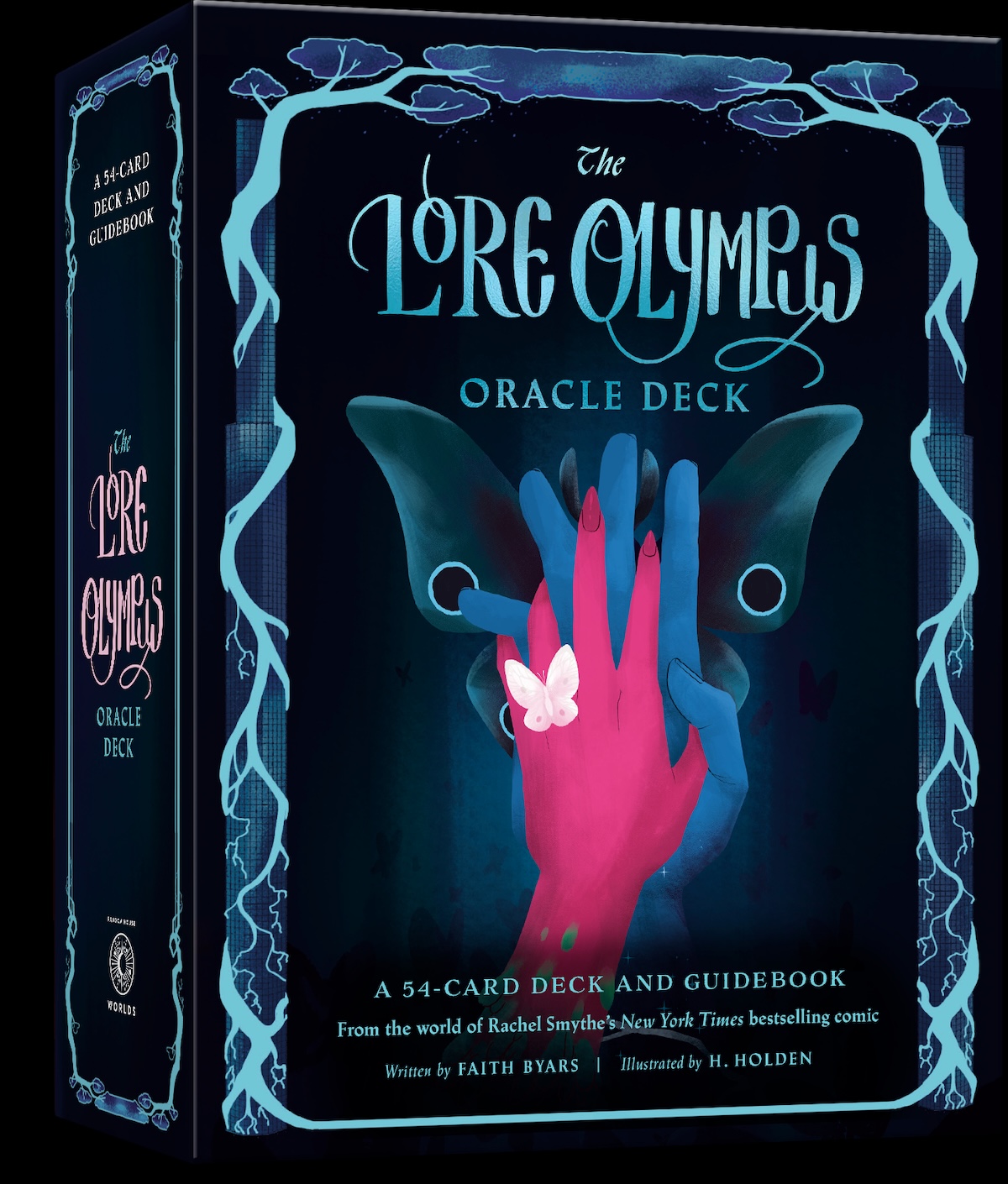
KAPLAN: Has there been any Lore Olympus inspired spin-off, like the cookbook or any other merch, that has been particularly memorable to you? Is there anything you’d like to see in the future that hasn’t been made yet?
SMYTHE: Oh gosh, I really like the The Lore Olympus Oracle Deck, written by Faith Byars, because my friend H. Holden did the artwork for it.
One of the first conventions I did stateside, LA Comic-Con, Holden bought some fan art. And I really liked the fan art, and I had it up in my office. And I asked myself, “I wonder if I’ll ever talk to that person again. I have no idea.” But to this day, I still have the art up in my office. They did some banging fan art. It’s so good.
I was finishing up the Lore Olympus web run, because we’ve been talking about doing an Oracle deck for a little while, and I really wanted an Oracle deck or a tarot deck. But the idea of doing 54 illustrations… That’s a big project. Physically and mentally, I did not have the resources to do this project. And I said, “I know the artist who could do this,” and they did such an amazing job! And I just, oh, I love it, there’s something about it.
I look at my own artwork, and I think when you read your own writing or look at your own artwork, you know how the sausage is made. So you’re just like, “Meh.”
You just know it too closely. And I have this thing where once I’ve drawn something, immediately I don’t like it. And that’s just my thing that I have to deal with.
And over the past couple of years, there’s been times where I just don’t have the capacity to work on projects like this. And so when that happens, it’s fine to ask for help, right? And passing over your baby to someone else to work on it… In the instances where you are getting someone else to work on your project for you and help you out, it can be a mixed bag.
But sometimes you’ll get work back that is so beautiful… where you’re saying, “Wow, you see this in me? You made this based on my work? This is what you think of my work?” And it’s so nice. I find it really emotional.
So I really enjoyed that project. It was really cool! There’s a couple of cards in that set which are really personally important to me. I found it to be a very touching and memorable process.
In terms of merchandising that I would like to see, probably makeup. I remember I did fan art for kicks a long time ago of different types of eyeshadow palettes. I did all the different characters and moments and names for the different eyeshadows. I think there was a Thanatos and Hermes blush/bronzer combo, and it was called “The Pay Raise” or something like that.
It was a lot of fun. I designed a lot of palettes just because I enjoyed doing that sort of thing. And palette names are so fun! Personally, I can’t even wear eyeshadow, because I’m allergic to most eye shadow, but I still really like eye shadow palettes.
KAPLAN: Do you have any thoughts on the future of webcomics in particular, and/or the future of comics in general?
SMYTHE: I think that historically there’s been a lot of hang-ups when it comes to webcomics. And this is more observational, so this could be feelings more than fact, if I’m being honest, but having grown up in a certain time frame where it’s just like webcomics have kind of been the lesser to print comics.
Not to say that I have a problem with print comics at all, but I think that’s just the tone that it was for many years. And I do think it’s interesting, even with scrolling comics and things like that now, is there still this kind of hang up about webcomics, just a little bit.
We watch all our movies at home on Netflix and we read all of our news on websites, no one’s reaching for a paper. And so I think there is still a little bit of stigma there for webcomics (or has been), and I feel we’re finally starting to lose that, where it’s recognized that these are a legitimate form of entertainment.
These other forms of digital entertainment are perfectly fine. We can enjoy them this way. We’ve even got books on e-readers! And I’m asking, “Why? How are webcomics different? Riddle me this.” Just as a lover of comics in all forms: WHY?
Some of my favorite comics have been ones that people have just posted to the social network formerly known as Twitter. There was this person, and I wish that I had saved the link somewhere, but they wrote this short comic that was about their experience with schizophrenia; how they developed it and how they went into care and what their life looked like.
And I said, the story that they’ve done is so valuable, and I think it would be difficult to get it out there in print. But since most people have access to the internet, anyone can make a comic and put it up anywhere, pretty much.
That comic really stuck with me and I thought, “If more people had access to this type of thing, then it would really relieve the stigma around schizophrenia and things like that.” And I think it was so useful, and it was so amazing for them to share that in that format. I think stuff like that’s special.
I hope that it keeps happening. I feel pretty good about the future of webcomics. I think, as I said before, they’re becoming more of a legitimate way to entertain people, and it’s balancing out from print comics.
What I really like about web comics is anyone can make one, and that’s cool. You can make any sort of account online on a website and you can just start uploading your comic, your story, as of yesterday. And I think that’s a very, very cool thing. I think that really lends itself to a big diverse well of different types of stories that can create empathy and community.
KAPLAN: We kind of touched on this earlier, but do you have any advice for aspiring comics creators?
SMYTHE: I think, number one, is “finished is better than perfect.” I know I touched on this before, but I really think it’s important to finish things. It builds confidence, and I think you should do that.
I feel like a little bit of a fraud giving advice. I feel like one of those YouTubers who’s got 10 million followers saying, “Here’s how you get successful on YouTube.” Because the conditions have changed a lot since I first started trying out!
But I do think you have to have a certain level of resilience to be able to make comics, in the sense that you kind of just need to keep trying over and over again, even if it feels like no one’s paying attention – because that was certainly the case with me. I tried a lot before Lore Olympus worked. I’ve gone to conventions and sold zero…
God, you know how Silicon Valley has that slogan, “move fast and break things”?
They shouldn’t have that anymore. No, not for them. Take it away and give it to illustrators, give it to writers. You guys should move fast and break things. Not yourselves, though! But keep working at it, keep putting stuff out there, just be resilient. Build community.
I think community is really important. Some of the people I’ve met through making comics are the most important people I’ve ever met in my life. And kindness to one another. That’s really going to help, especially in these times, because I feel like sometimes people can kind of get swept up in their individualism and it can feel like you need to be competitive. But you don’t! Making community and friends is really important in this industry because it can be quite lonely.
That’s my main advice. It’s mainly working through that painful bit where you’re saying, “I don’t like this.” And you just have to get over it so you can get your work done and out there.
KAPLAN: What do you see next for yourself, creatively speaking?
SMYTHE: Currently I’m working on a print graphic novel for Inklore, which is called Eleanor’s Deathbed. It is a standalone story. Currently I have done my first draft and thumbnails and I’m currently on revision for it. It’s definitely a different process where a webcomic is very much – while there is planning, it’s still very “as you go,” but with this, it’s like you make the whole thing all at once, which is really cool.
I think it allows you to sharpen your points and your story beats. But I guess the hard part is you just kind of have to work on it for a long period of time before you get to share anything.
KAPLAN: Is there anything else you’d like me to include?
SMYTHE: Lore Olympus is going to be an animated TV show with Prime Video!
It’s going great. I’m very excited. I feel like it’s going to be a big welcome home to the fans of the comic.
Lore Olympus Vol. 11 is available now at a local bookstore and/or public library near you. And The Lore Olympus Oracle Deck is available now as well.

