

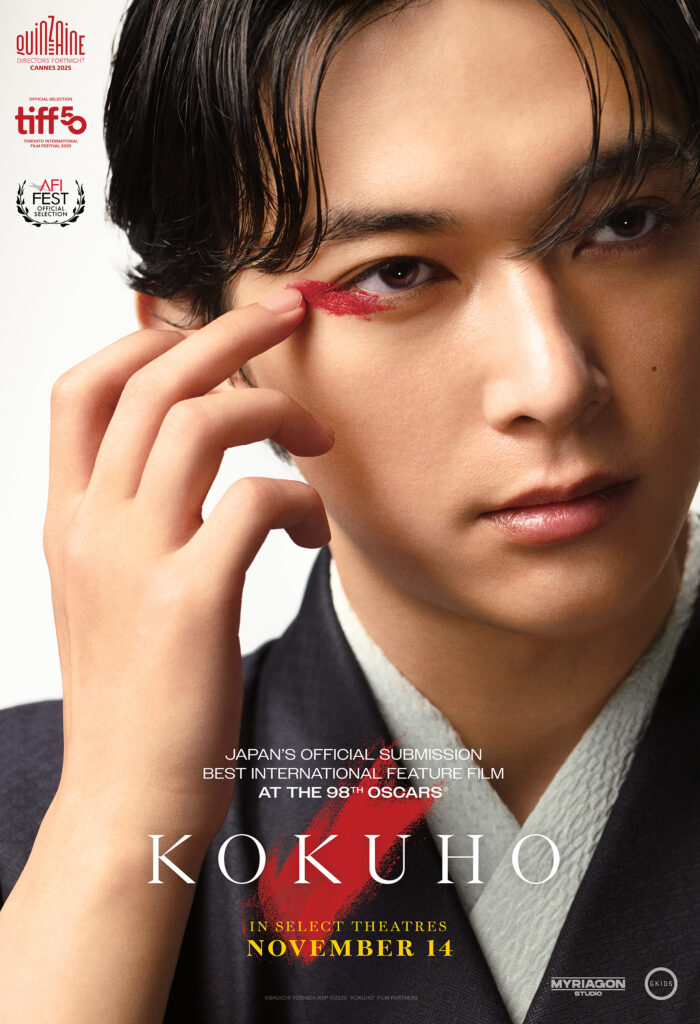
Kabuki is one of the world’s most exacting art forms. Every movement, and every inflection of voice carries great weight and meaning. So it’s appropriate that the kabuki epic Kokuho, Japan’s submission to the Academy Awards for Best International Feature Film, does the same. This is a film where every argument and emotion holds some meaning creating an epic tale of two people perfecting their craft in an art form that demands it.
Based on the novel by Shūichi Yoshida, Kokuho covers the relationship between two kabuki performers over decades. The adopted Kikuo (Ryo Yoshizawa), the son of a yakuza, studies the art form religiously. Shunsuke (Ryusei Yokohama) is the skilled but lazy heir to a kabuki legend Hanai (Ken Watanabe).
There is an intense rivalry between the two as they rise in fame as onnagata, the men who perform female roles in kabuki. Kikuo envies Shunsuke’s blood connection to Hanai and the opportunities (and protection) that offers. Shunsuke envies Kikuo’s obvious talent. They clearly can bring out the best in each other, but the conflict between meritocracy and legacy constantly comes between them. When Hanai picks Kikuo over Shunsuke to replace him in a performance, it only tears them further apart.
Director Lee Sang-il isn’t a visual director. Outside of the kabuki sequences, the camerawork and editing favor a static approach rather dynamic camera angles and fast cutting. But that works in the film’s favor as the performances are what’s important here. Like the art form this film centers around, it’s the subtleties in the performances and the emotions, whether internal or expressed, that tell the story. Every conversation and action holds deeper meaning. Even the final images of the film, where Kikuo witnesses snow falling on stage, offers ambiguity and double meaning.
It’s the performance by Yoshizawa that truly shines in this film. Kikuo represents a dichotomy between a violent upbringing of the son of a Yakuza and victim of the Nagasaki atomic bombing, and delicate nature of kabuki. There’s a quiet rage under Kikuo knowing that not being born into the institution of kabuki. Yoshizawa captures the complexities of a performer whose legacy is violence but who wishes to inherit an art so dear to him even if it costs him everything.
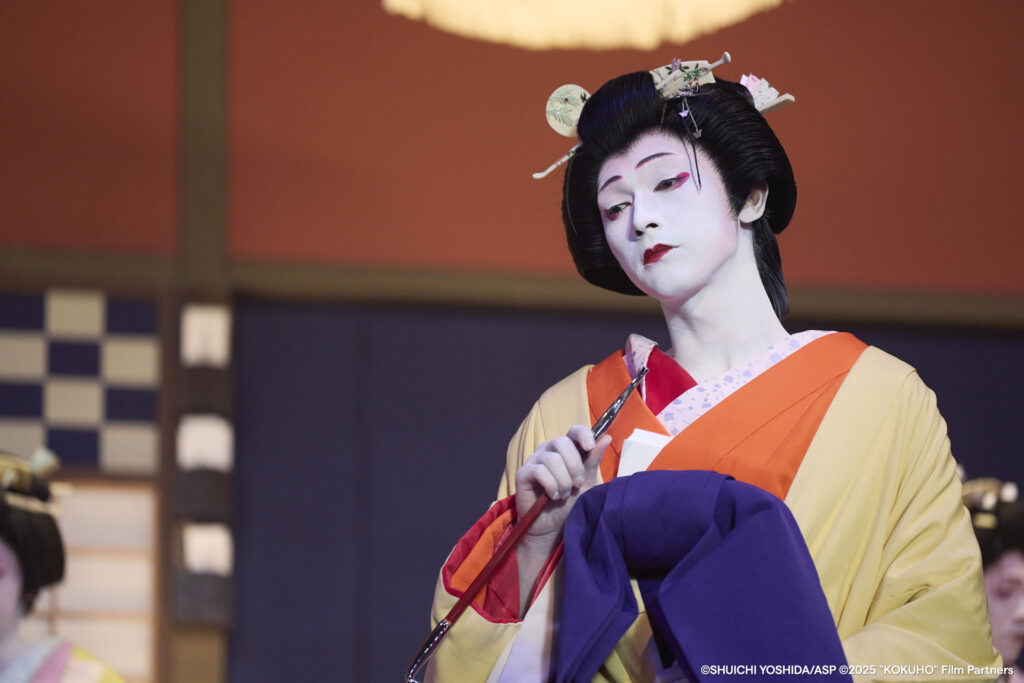
All of that said, the film really comes to life in the kabuki sequences. Lee and cinematographer Sofian El Fani understand and capture both the beauty and power of this unique artistic medium. These are the most expressionistic scenes in the film with their bold colors and brightly lit sets. More than anything else in the film, they convey the characters inner feelings from Kikuo’s salvation through kabuki to Shunsuke’s doubts that he can live up to his family’s legacy.

Expressing the power of another form of media in film is difficult, especially trying to convey the brilliance of a practitioner. Kokuho though understands why kabuki has endured for so long. Kabuki may bring out the worst in both Kikuo and Shunsuke but also pushes them to greater and greater heights.

