
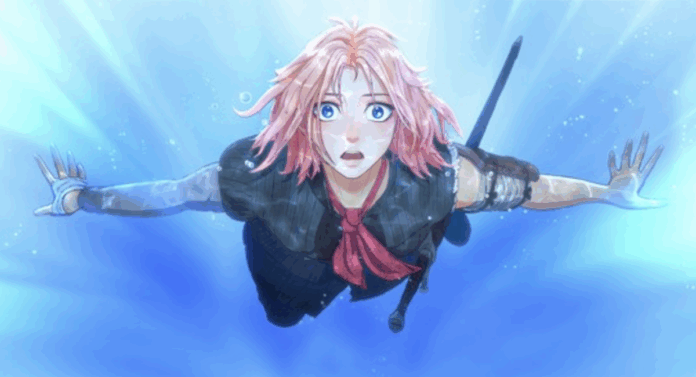
Scarlet might be the most ambitious film from director Mamoru Hosoda to date.
This modern reinterpretation of Hamlet features massive battle scenes, gorgeous visuals, and themes that have potential to push the director to new heights. Scarlet has all the hallmarks of a magnum opus.
Unfortunately, it isn’t. Instead, it once again sees Hosoda relying on impressive visuals while delivering a disappointingly simplistic narrative.
Hosoda has spent the last decade reinterpreting western literature classics into wildly imaginative visuals. He turned The Jungle Book into a pure fantasy world of talking animals with The Boy and the Bear. Beauty and the Beast became a story of connection in the age of social media in Belle.
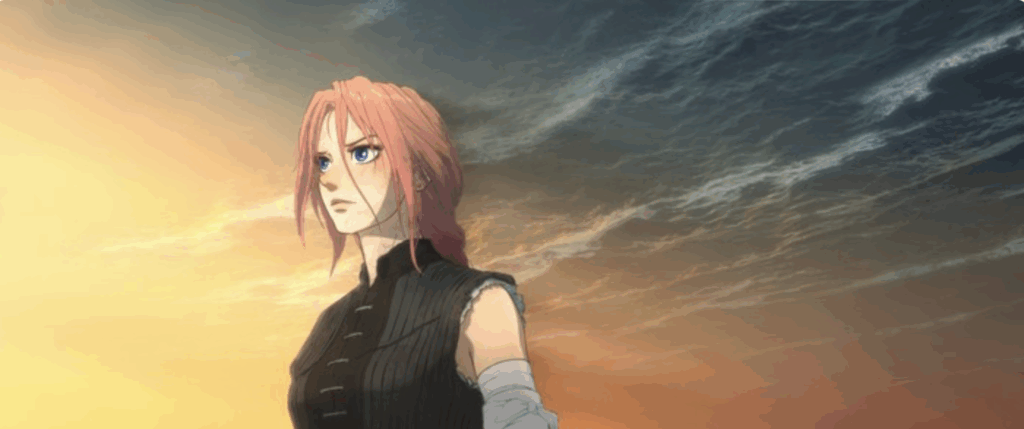
Now arrives Scarlet, his interpretation of William Shakespeare’s Hamlet, or his idea for a potential sequel. Scarlet, his stand-in for the Danish prince, attempts to poison her power-hungry uncle Claudius. Instead, someone poisons her and she awakes in an afterlife that looks like a post-apocalyptic wasteland. Scarlet carries on her quest for vengeance in the afterlife, declaring she’ll only rest when he’s finally eradicated.
This vision of the afterlife seems fairly unique. Neither a paradise nor perdition, it’s a massive, empty desert. Souls from past and future reside here. Rusted swords and armor lie under the dirt. Structures reminiscent of places on Earth occasionally pop up, but they’re decayed, barely complete objects. If people “die” here, they become wilted leaves and fly off in the wind. Every now and then a massive dragon appears to spew lighting everywhere.
These visuals are where Scarlet excels. The animation takes on different looks depending on the era being depicted. The Denmark of Scarlet’s life exists in more traditional 2D animation, in greys and browns to denote how depressing this world is.
When Scarlet gets to the afterlife, the world becomes 3D, cell-shaded animation. This occasionally looks jerky and stiff but its unnerving qualities only heighten the otherworldly nature. Additionally, it allows for massive battles reminiscent of something that would be in an Akira Kurosawa film. This is an animated film meant to be seen on a big screen.
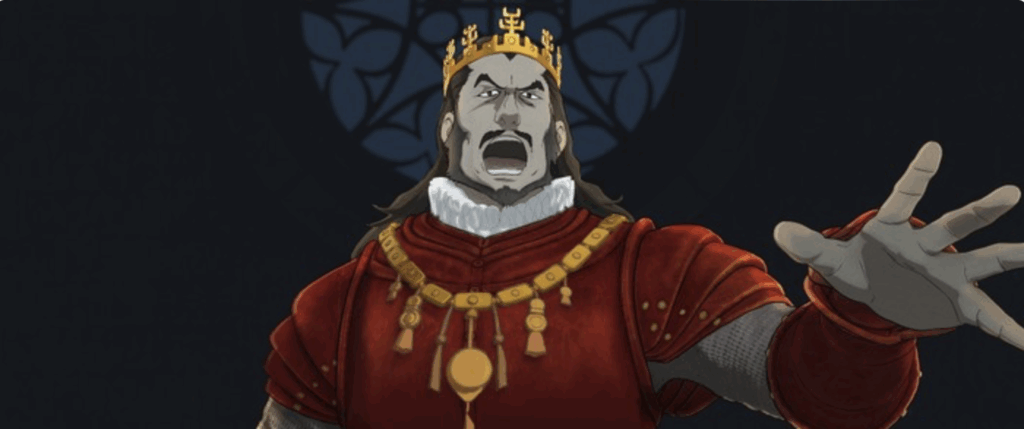
That the narrative isn’t as ambitious is disappointing. Hosoda may take inspiration and character names from Hamlet, but he never digs deeper into the material than making something akin to Hamlet 2: This Time It’s More Personal.
Characters from the play such as Laertes, Polonius, and of Rosenkrantz and Guildenstern appear. He then robs these characters of their richness and complexity to simply function in flattened roles as random bad guys. His sole desire to invoke Hamlet appears to be a desire for a happier ending for the tragedy.
The idea of Scarlet carrying her thirst for revenge and need to self destruct into the afterlife offers fascinating possibilities. How much can one live on vengeance alone? Her saintly father’s last word is “Forgive,” which creates enough mystery for the heroine to examine herself.
Because Hosoda can’t dig deeper into Shakespeare’s play or its characters, he invents a character from the present, Hijri, who exists to rob Scarlet of her agency. Scarlet can’t move forward if she doesn’t have this wise man from the future to point out the error of her ways. This forces Scarlet to be either an aloof badass or a blubbering crier who can’t handle her emotions in any given scene. Poor voice actress Mana Ashida does her best with that.
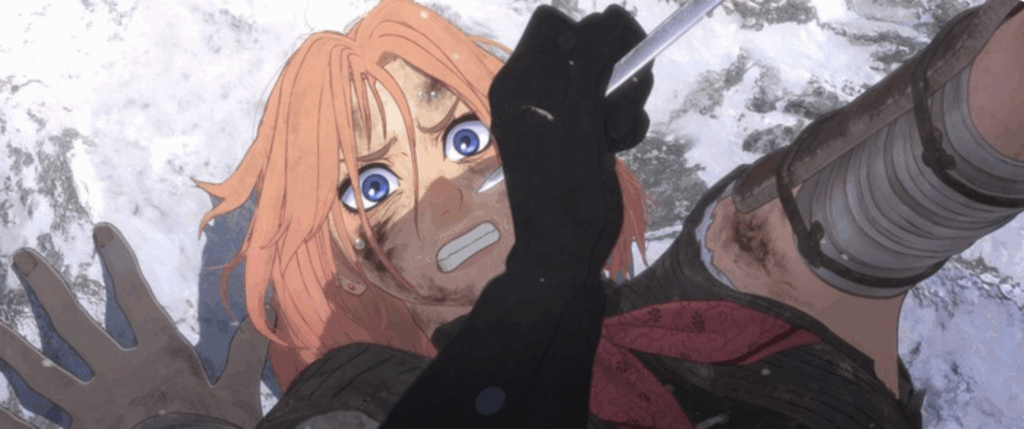
And that’s what so frustrating about Mamoru Hosoda as a filmmaker. He never has the confidence or desire to really dig into what he presents to an audience. The themes in his previous films and in Scarlet have the weight of balloons. They might as well float away. For an animator as visually ambitious as Hosoda, once again the narrative never matches that ambition.

